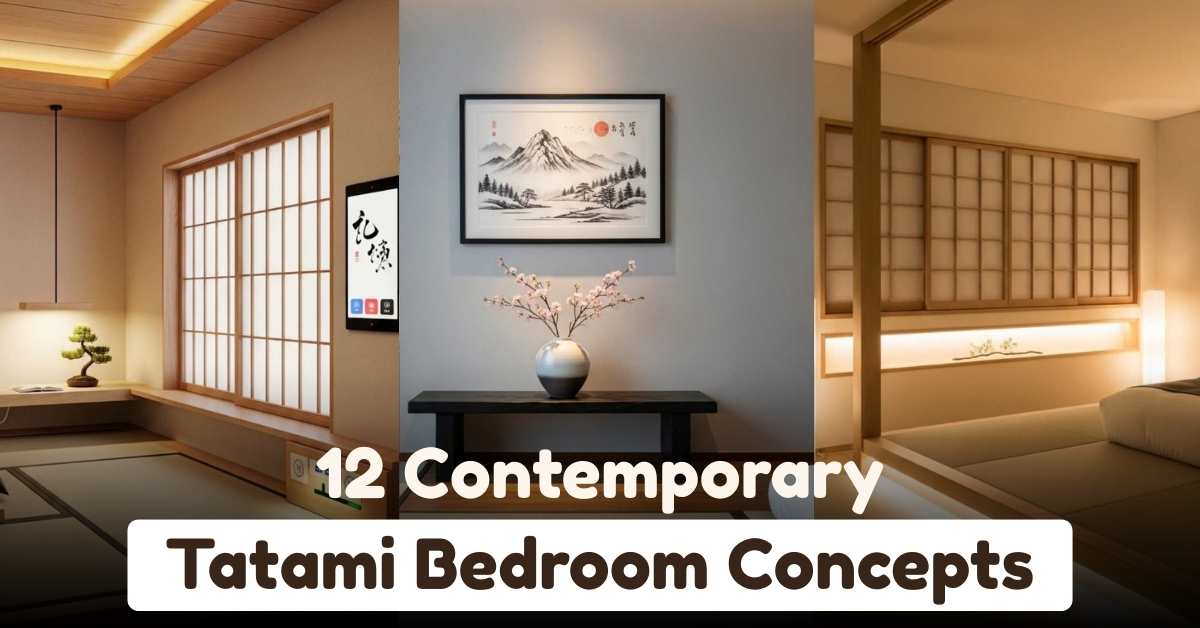
A contemporary tatami bedroom is not just a design choice. It is a lifestyle decision rooted in simplicity, structure, and emotional balance. While modern interiors often focus on decorative trends, tatami inspired bedrooms return to proportion, material honesty, and spatial awareness.
Across Tier 1 countries such as the US, UK, Canada, and Australia, homeowners are increasingly searching for bedrooms that support better sleep, reduced stress, and visual calm. Contemporary tatami bedroom concepts respond to that need by combining Japanese floor culture with modern architecture and smart storage.
Below is a fully reimagined, high value alternative article that expands on modern tatami bedroom ideas with deeper design insight, practical logic, and SEO strength.
12 Contemporary Tatami Bedroom Concepts
Table of Contents
1. Ground Level Living as a Design Philosophy
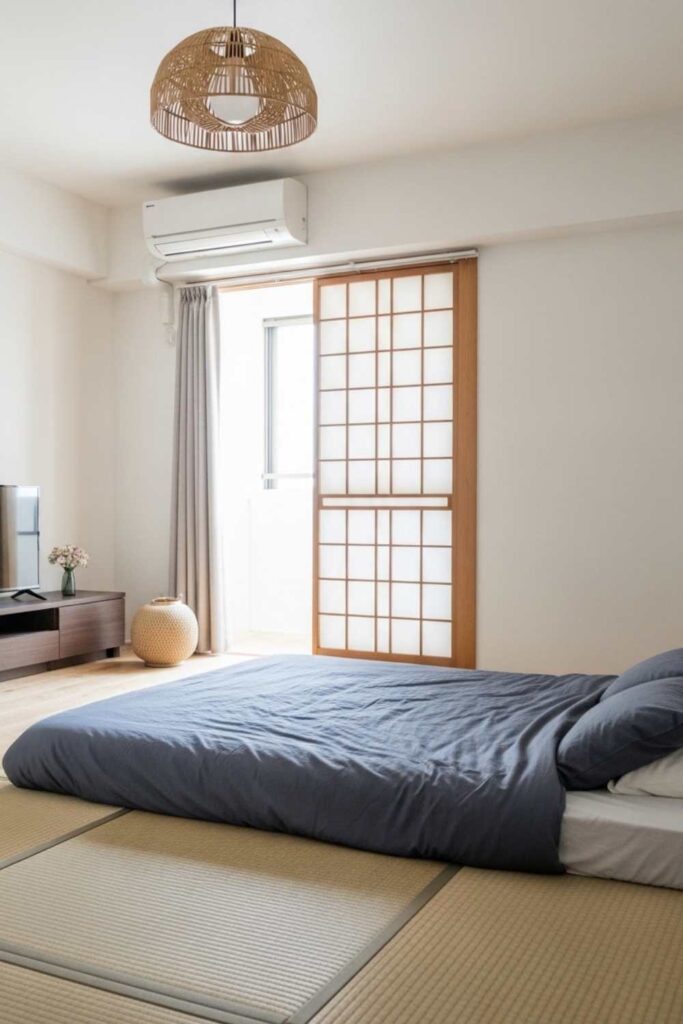
Contemporary tatami bedroom design begins with a shift in perspective. By lowering the sleeping surface closer to the floor, the entire room feels more stable and connected to the ground. This grounded approach reduces visual tension and increases spatial calm.
In urban apartments, low level living makes ceilings appear taller and rooms feel wider. The horizontal emphasis guides the eye naturally across the space without interruption.
This philosophy supports emotional relaxation because the bedroom feels less dominant and more balanced. The result is a space that quietly encourages rest.
2. Elevated Tatami Platforms With Integrated Storage
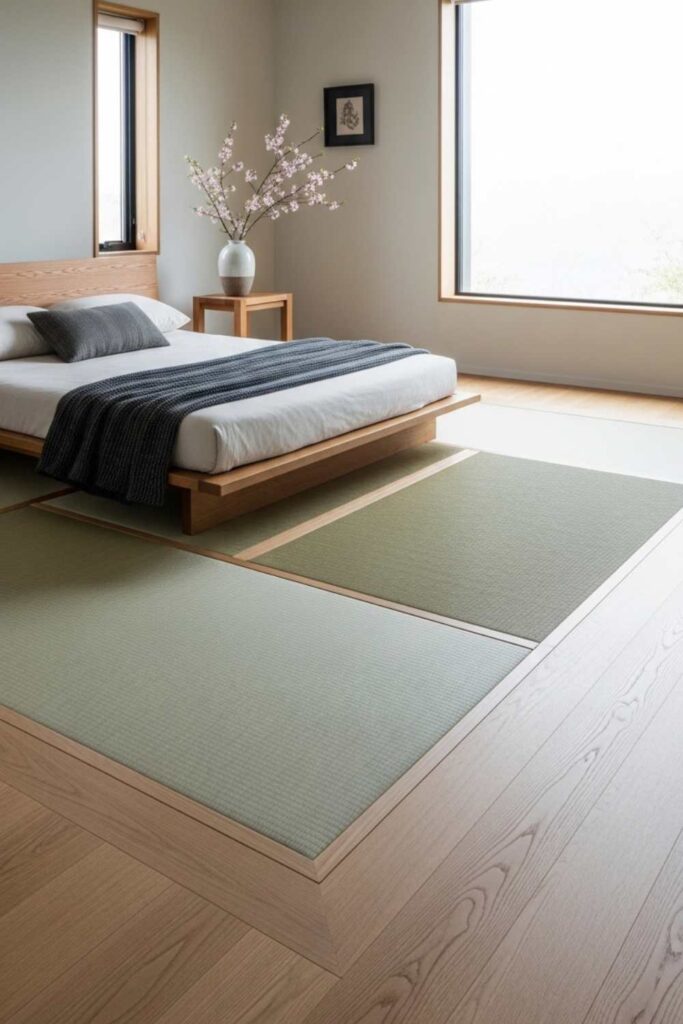
Instead of placing tatami mats directly on the floor, many contemporary designs use slightly raised platforms. These platforms subtly define the sleeping area while allowing integrated drawers beneath.
This solution is ideal for small bedrooms where storage is limited. Hidden compartments preserve minimal aesthetics while maintaining functionality.
The integration of storage within the platform prevents bulky wardrobes from overwhelming the space, ensuring the bedroom remains visually light.
3. Hybrid Wood and Tatami Combinations
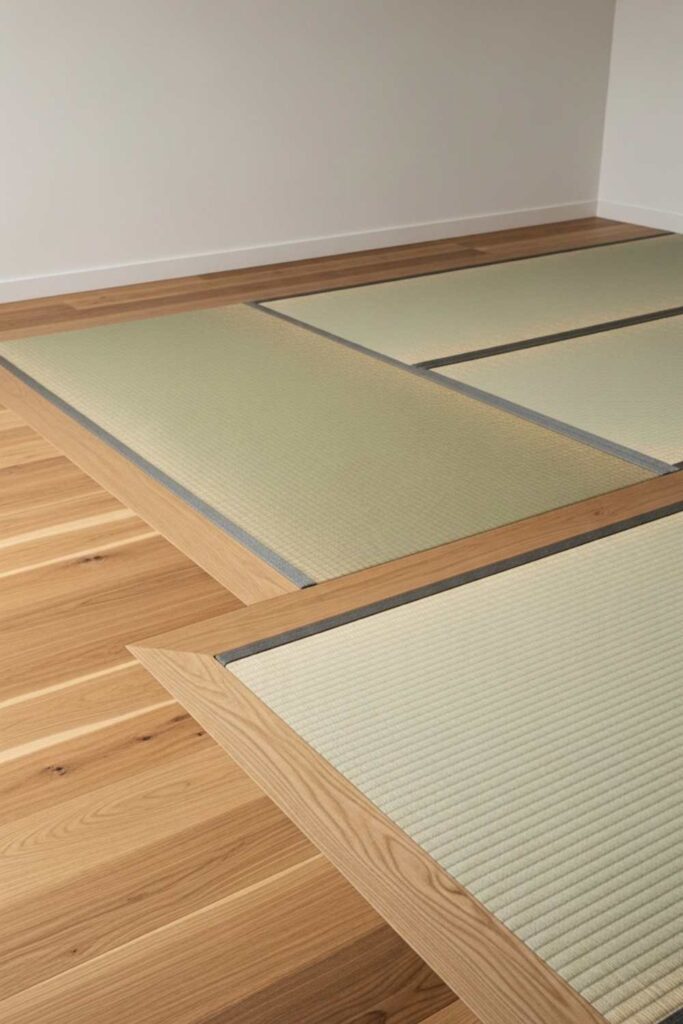
Modern tatami bedrooms often combine natural wood flooring with inset tatami sections. This hybrid approach creates contrast while preserving tradition.
Light oak, ash, or walnut frames around tatami mats add architectural definition. The mix of smooth wood and woven texture introduces quiet depth without clutter.
This design works particularly well in contemporary homes where homeowners want Japanese influence without fully traditional styling.
4. Sliding Shoji Inspired Partitions for Flexible Layouts
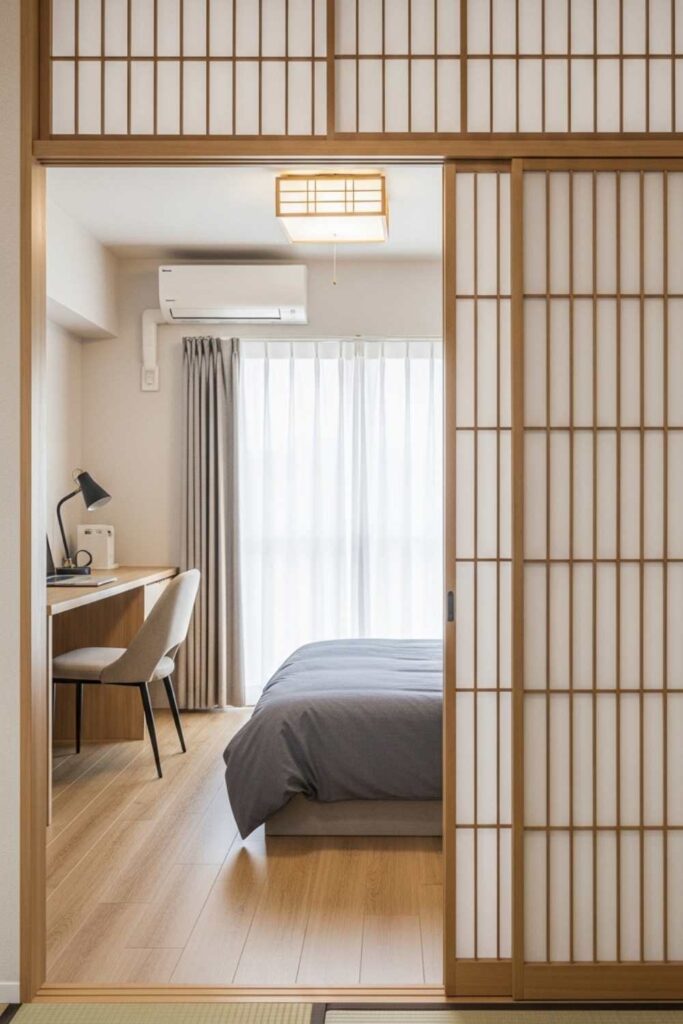
Sliding partitions inspired by shoji screens allow spatial adaptability. Instead of fixed walls, these panels open or close depending on privacy needs.
In studio apartments, sliding dividers separate sleeping zones from work or living areas without sacrificing openness.
The clean vertical lines of shoji style panels enhance modern tatami bedroom design while reinforcing simplicity and light diffusion.
5. Neutral Earth Tones That Reflect Nature
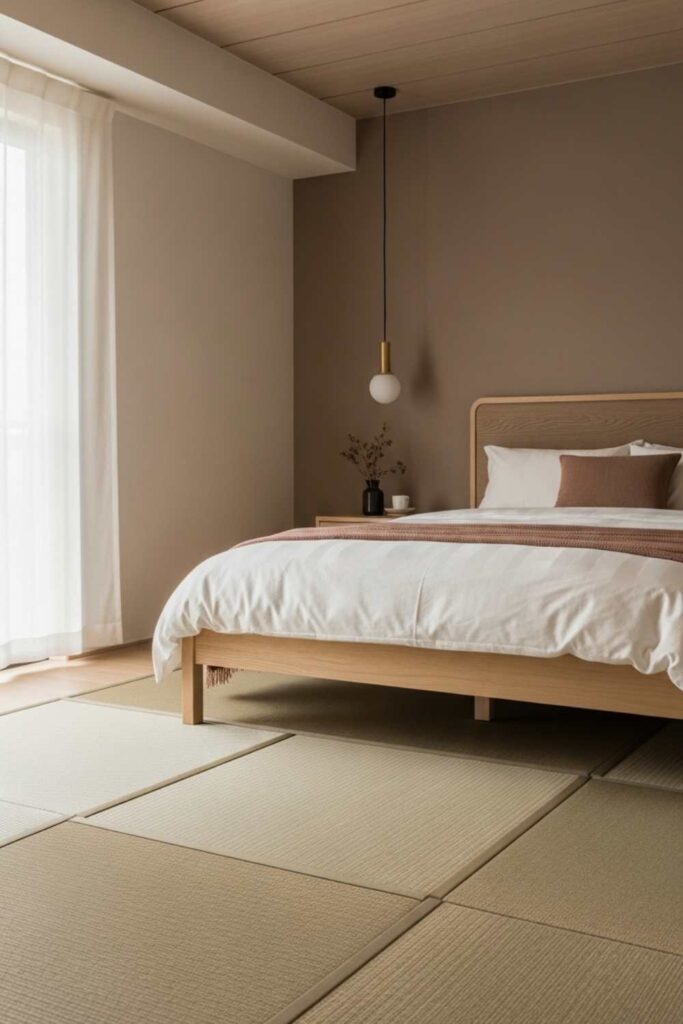
Color plays a subtle yet essential role in contemporary tatami bedrooms. Sand beige, warm ivory, soft clay, and muted stone tones dominate the palette.
These colors amplify natural light and create visual warmth without heaviness. They also complement the woven surface of tatami mats naturally.
By avoiding bright or artificial hues, the bedroom feels more organic and timeless.
6. Built In Wardrobes That Preserve Floor Flow
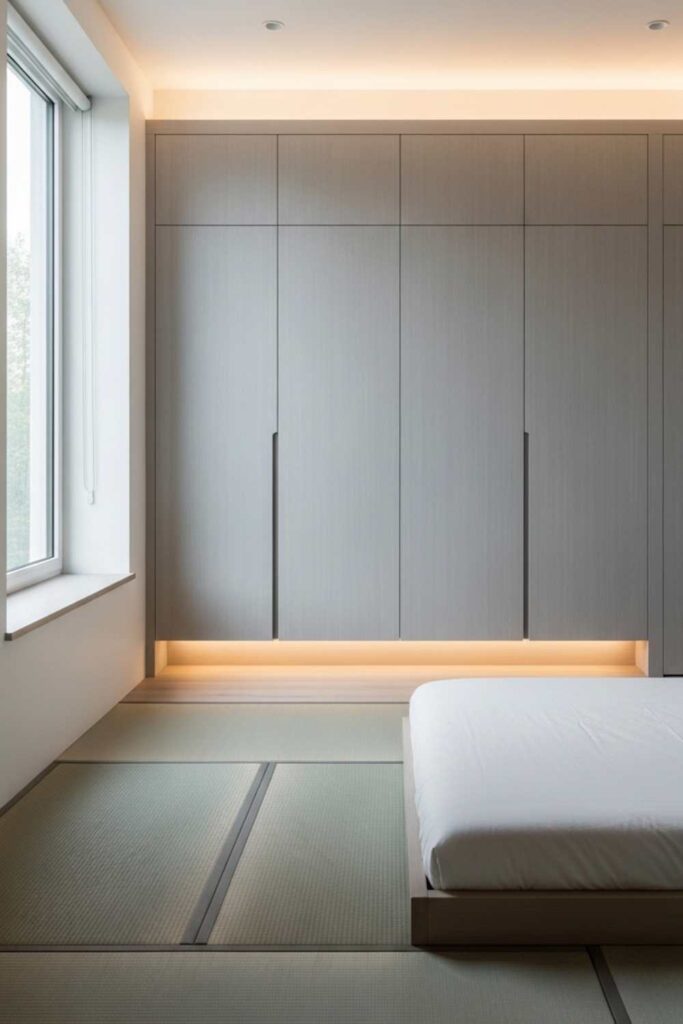
Storage in a tatami inspired bedroom must remain invisible. Built in wardrobes with flush panels prevent visual interruption.
Sliding doors replace hinged systems to maintain uninterrupted circulation. Minimal hardware keeps surfaces clean and quiet.
This approach ensures that modern tatami bedroom design remains focused on openness rather than furniture bulk.
7. Soft Lighting at Floor Level
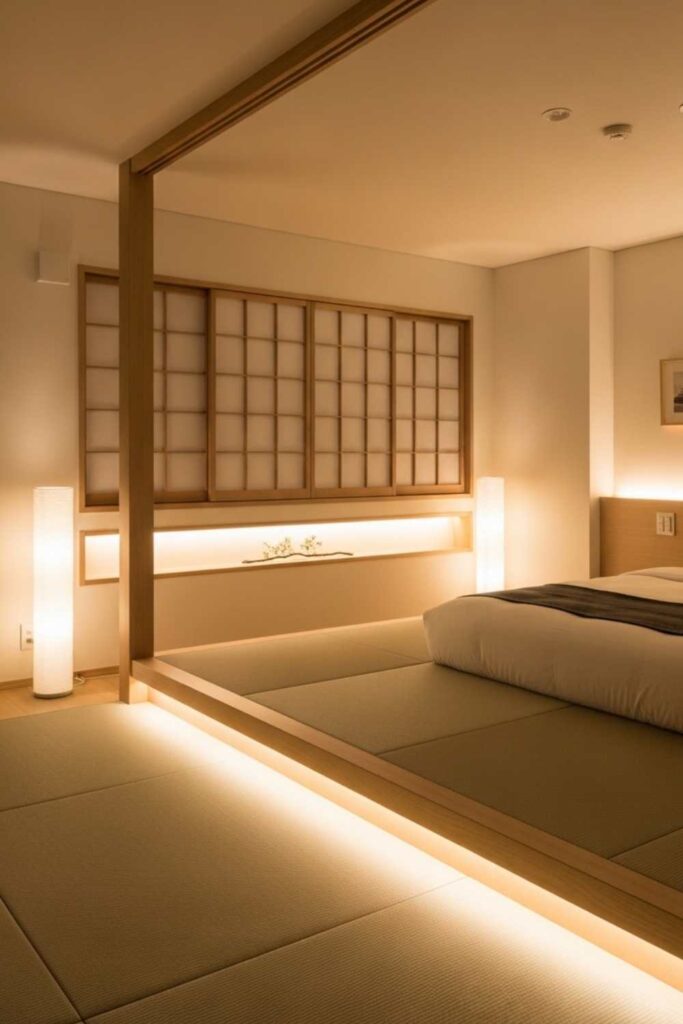
Lighting in contemporary tatami bedrooms should feel indirect and gentle. Floor lamps, low wall sconces, and concealed LED strips emphasize horizontal flow.
Lighting placed near floor height reinforces the grounded concept of the space. It also reduces glare and promotes evening relaxation.
Warm white tones work best, supporting circadian rhythm and emotional comfort.
8. Tatami Bedrooms Adapted for Small Urban Apartments
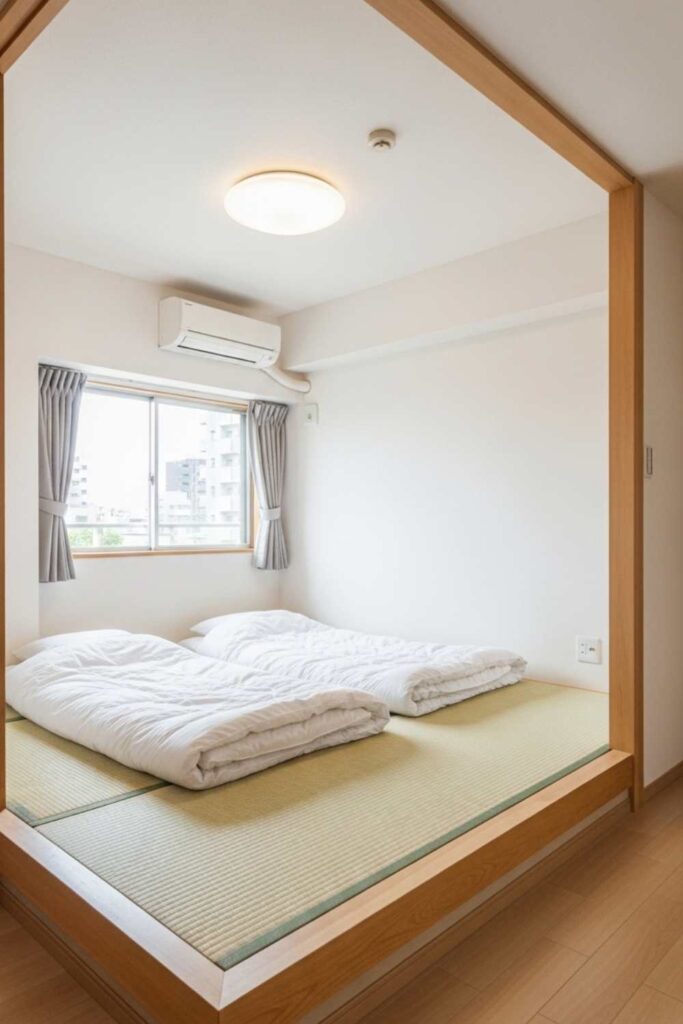
Urban living requires flexibility. In compact city apartments, tatami zones can double as sleeping and meditation spaces.
During the day, futon mattresses can be folded and stored, leaving the tatami platform open for seating or stretching.
This adaptability aligns perfectly with modern lifestyles where rooms must serve multiple purposes without feeling overcrowded.
9. Minimal Decorative Accents With Intentional Placement
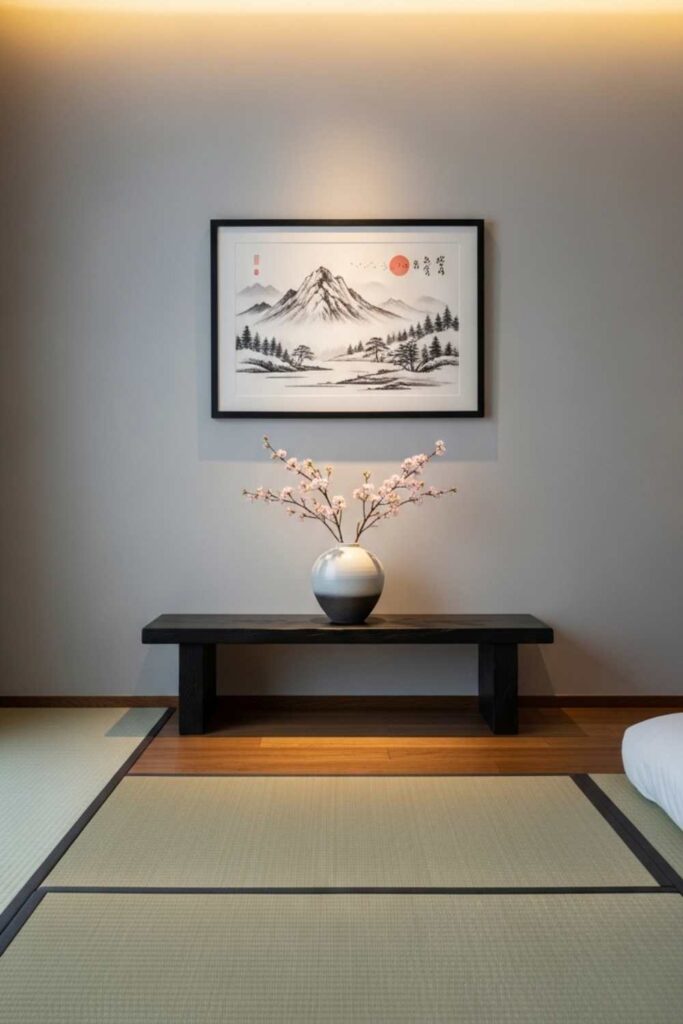
Decoration in a contemporary tatami bedroom should be selective. A single ceramic vase, a framed ink artwork, or a low wooden bench is often enough.
The goal is to create focal points without disrupting negative space. Each element should have breathing room around it.
Intentional placement reinforces visual clarity and prevents overstimulation.
10. Integration of Modern Technology Without Visual Clutter
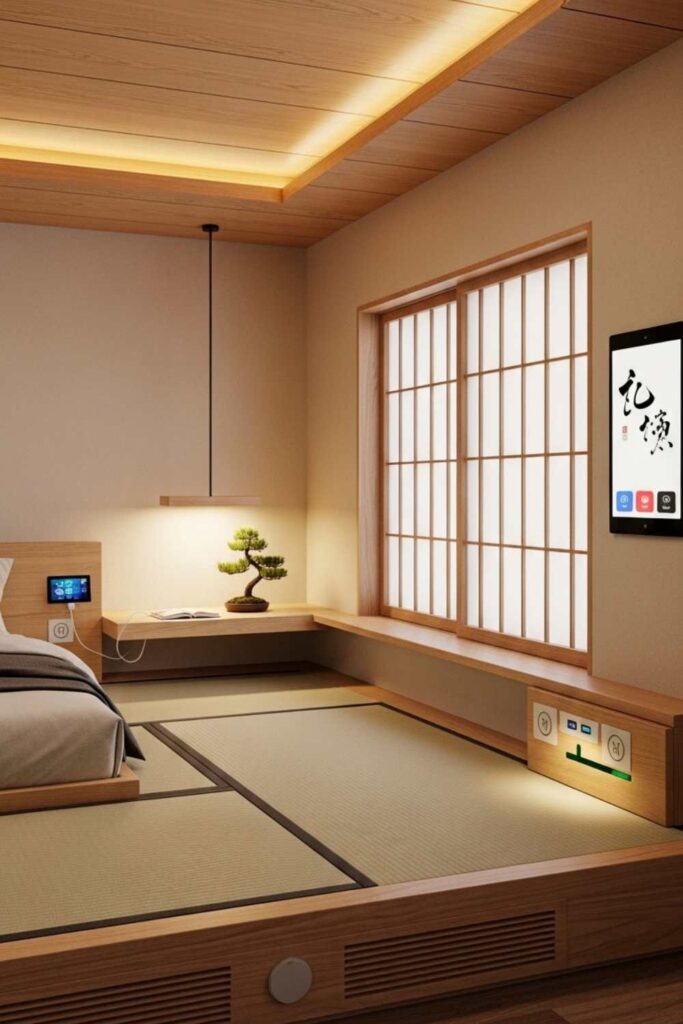
Smart lighting, climate control, and concealed charging ports can exist within a tatami bedroom without compromising aesthetics.
Wires should be hidden. Devices should blend seamlessly with wood surfaces.
The balance between traditional design and modern convenience defines high quality contemporary tatami bedroom interiors.
11. Natural Textiles That Complement Tatami Texture
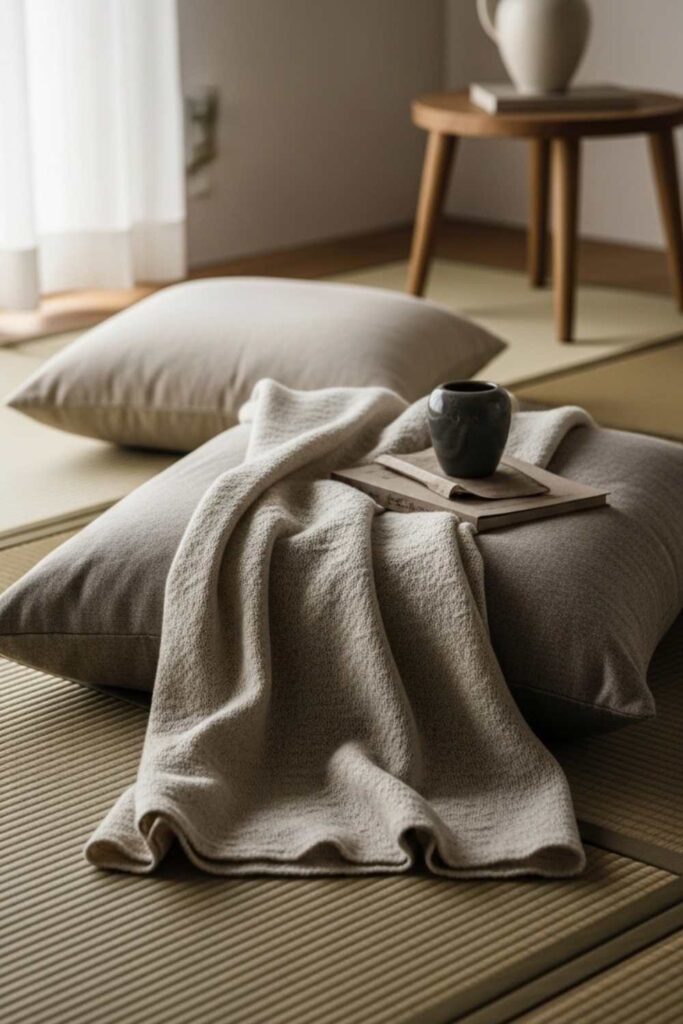
Linen bedding, cotton throws, and soft woven cushions harmonize with tatami mats. Synthetic fabrics often clash with the organic surface.
Layering textiles adds softness while maintaining simplicity. Neutral fabrics ensure the room remains cohesive.
Texture variation replaces decorative excess, allowing the space to feel refined yet comfortable.
12. Wellness Focused Layout Planning
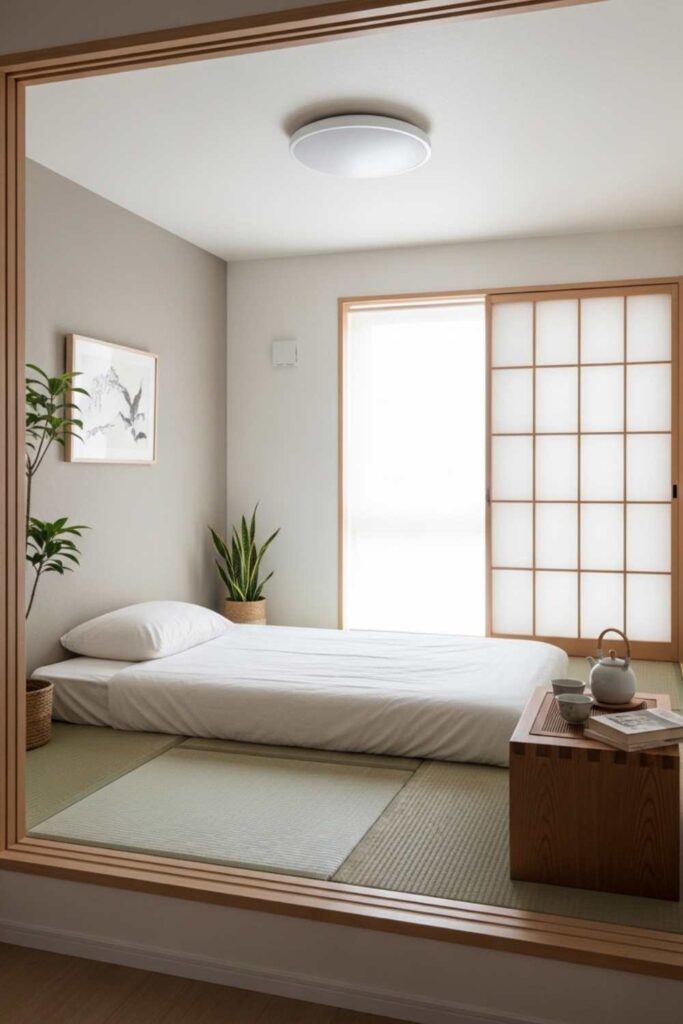
A contemporary tatami bedroom prioritizes rest above decoration. Bed placement avoids direct alignment with doors. Walkways remain uncluttered.
Natural ventilation and daylight are emphasized to improve air circulation and mood.
By designing with wellness at the center, modern tatami bedroom concepts become long term investments in comfort and mental clarity.
Frequently Asked Questions
Is a contemporary tatami bedroom suitable for cold climates?
Yes, but proper insulation and moisture barriers must be installed beneath tatami mats to prevent temperature discomfort.
Can tatami be used with underfloor heating?
Specialized tatami materials designed for compatibility with heating systems are available, but professional consultation is recommended.
Is this design suitable for families?
Tatami bedrooms work well for adults and couples. For children, protective maintenance practices may be required.
How long do tatami mats last?
With proper care and ventilation, high quality tatami mats can last many years.
Conclusion
Contemporary tatami bedroom concepts represent more than minimal design. They represent a shift toward intentional living, reduced clutter, and emotional grounding. By combining low platforms, neutral palettes, natural materials, and subtle technology, you create a bedroom that feels calm yet modern.
Read More: 12 Mood-Boosting Bedroom Paint Color Ideas for Better Sleep and Calm