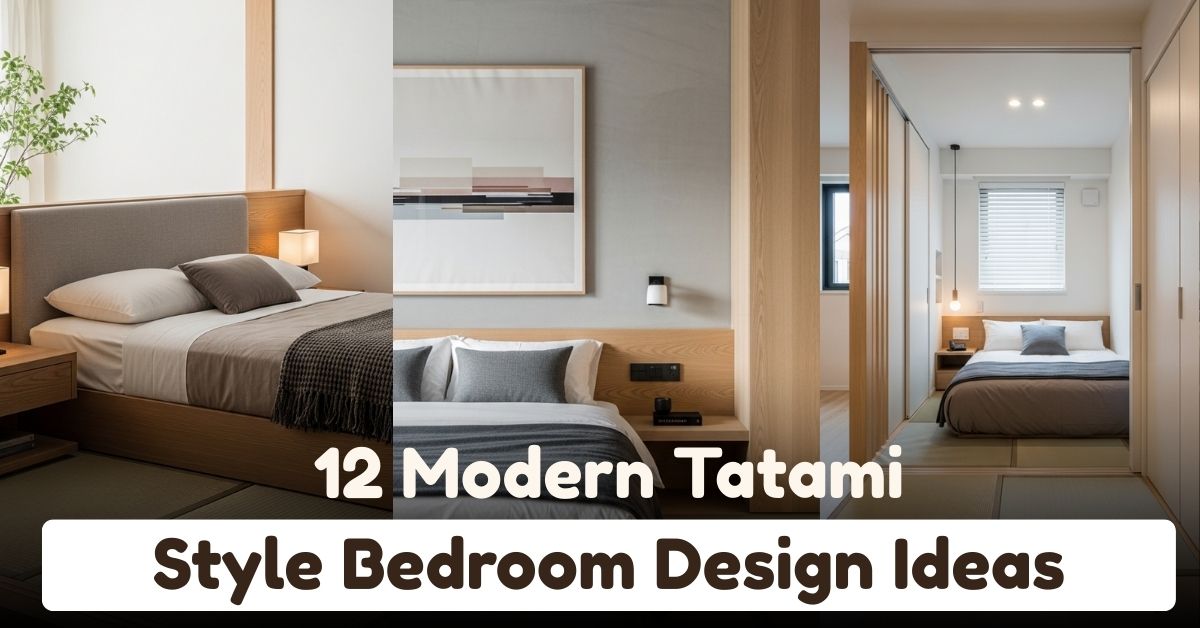
A modern tatami style bedroom design is not simply about placing woven mats on the floor. It is about creating a space that feels grounded, intentional, and emotionally steady. In a world where interiors are often overloaded with furniture and decoration, tatami bedrooms bring back balance through proportion, material honesty, and thoughtful restraint.
Across the US, UK, Australia, and Southeast Asia, homeowners are searching for interiors that support better sleep, mental clarity, and slower living. Modern tatami bedroom design answers that need by combining traditional Japanese floor culture with contemporary comfort. The result is a bedroom that feels calm without being empty, minimal without being cold, and functional without being cluttered.
Below are premium, high-value modern tatami bedroom ideas explained in depth, with practical insight and real design logic behind every concept.
12 Modern Tatami Style Bedroom Design Ideas
Table of Contents
1. Creating a Calm Foundation With Tatami Flooring
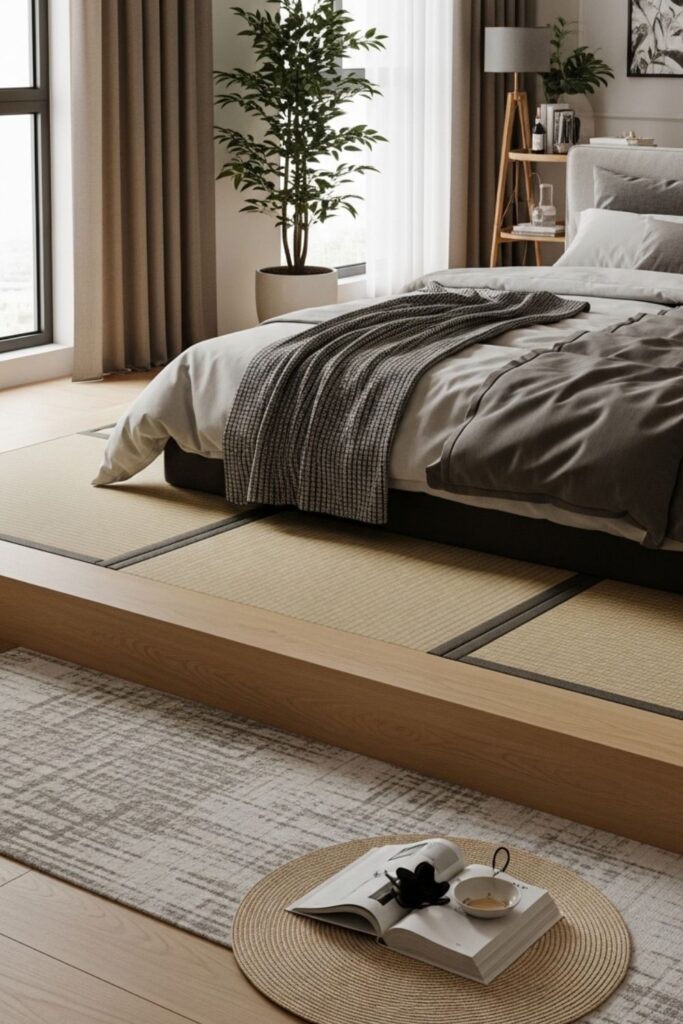
The foundation of a modern tatami style bedroom design begins at floor level. Tatami mats, traditionally made from rice straw and woven rush grass, introduce texture that feels organic and breathable. Unlike synthetic flooring, tatami has a natural softness that subtly cushions the body and reduces visual harshness in the room.
In contemporary homes, tatami is often installed as a defined sleeping zone rather than covering the entire floor. This zoning approach creates structure while maintaining flexibility. A raised tatami platform can also act as both bed base and spatial divider in open layouts.
From a wellness perspective, tatami flooring encourages low-level living and slows the visual rhythm of the room. This grounded base makes the bedroom feel steady, quiet, and emotionally centered.
2. Low Platform Beds That Redefine Modern Comfort

Low platform beds are a defining element in modern tatami bedroom design. Instead of tall frames and bulky headboards, the bed remains close to the floor, reinforcing horizontal balance and visual openness.
This lower profile creates the illusion of higher ceilings, which is especially valuable in compact apartments. The room feels larger because the eye moves across uninterrupted lines rather than vertical interruptions.
In high-end interpretations, custom wood platforms integrate hidden storage drawers beneath the tatami surface. This allows modern tatami bedroom design to remain minimal while still meeting contemporary storage needs.
3. Modern Tatami Bedroom Design With Intentional Minimal Furniture
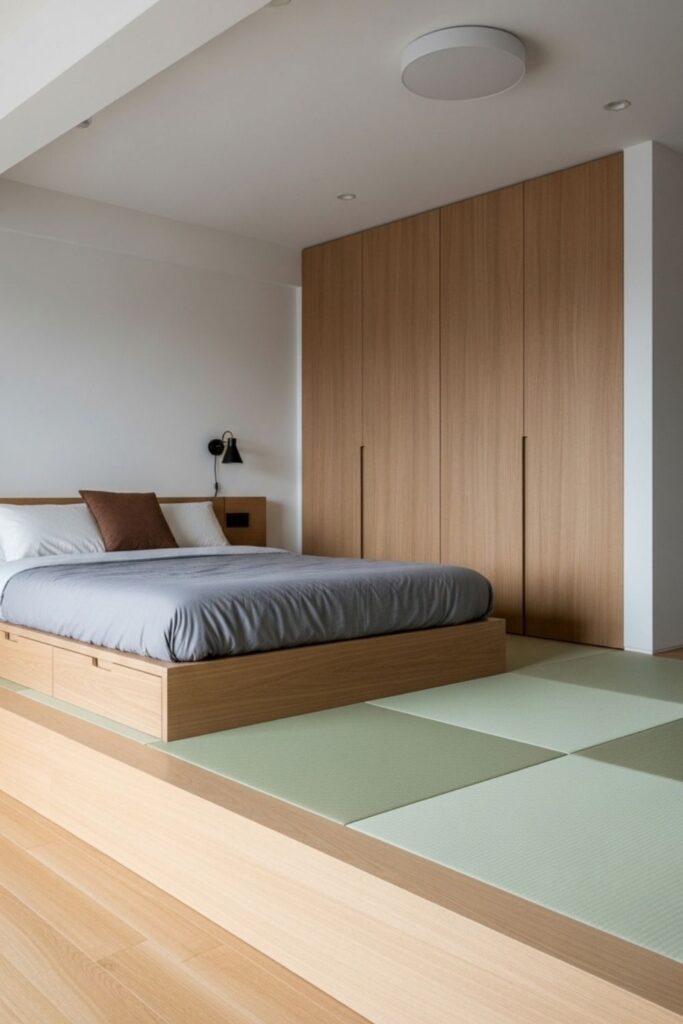
Minimalism in tatami interiors is not about emptiness. It is about careful selection. Every piece of furniture must serve both aesthetic and practical purpose.
Instead of multiple dressers and decorative tables, a single low console or built-in cabinet maintains visual clarity. Sliding wardrobe doors replace hinged closets to preserve floor flow.
Modern tatami bedroom design works best when negative space is respected. The emptier areas of the room allow materials and light to breathe, creating a sense of quiet luxury rather than austerity.
4. Japanese Tatami Bedroom Ideas Adapted for Malaysia and Tropical Climates
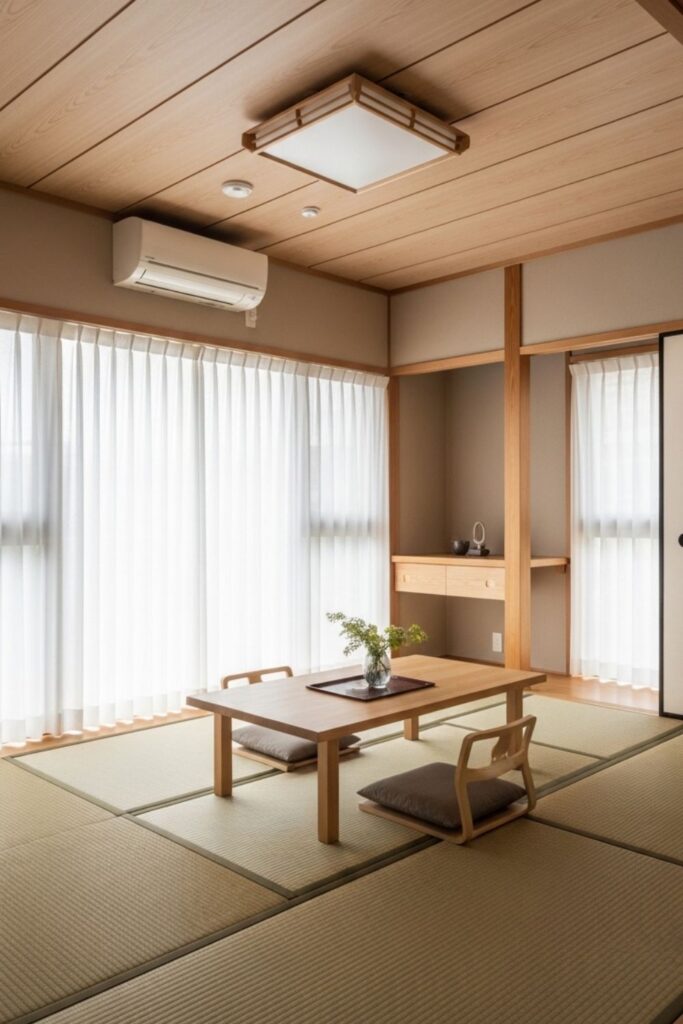
In regions such as Malaysia, Singapore, and parts of Australia, climate adaptation becomes essential. Modern tatami bedroom design Malaysia concepts often include improved ventilation, lighter wood species, and moisture-resistant tatami variations.
Large windows with sheer curtains allow cross airflow while diffusing harsh sunlight. Ceiling fans or concealed air systems maintain comfort without visual heaviness.
These regional adaptations maintain the spiritual calm of traditional Japanese bedroom decor while responding intelligently to tropical humidity and temperature.
5. Tatami Bedroom Sets That Blend Tradition With Modern Craftsmanship
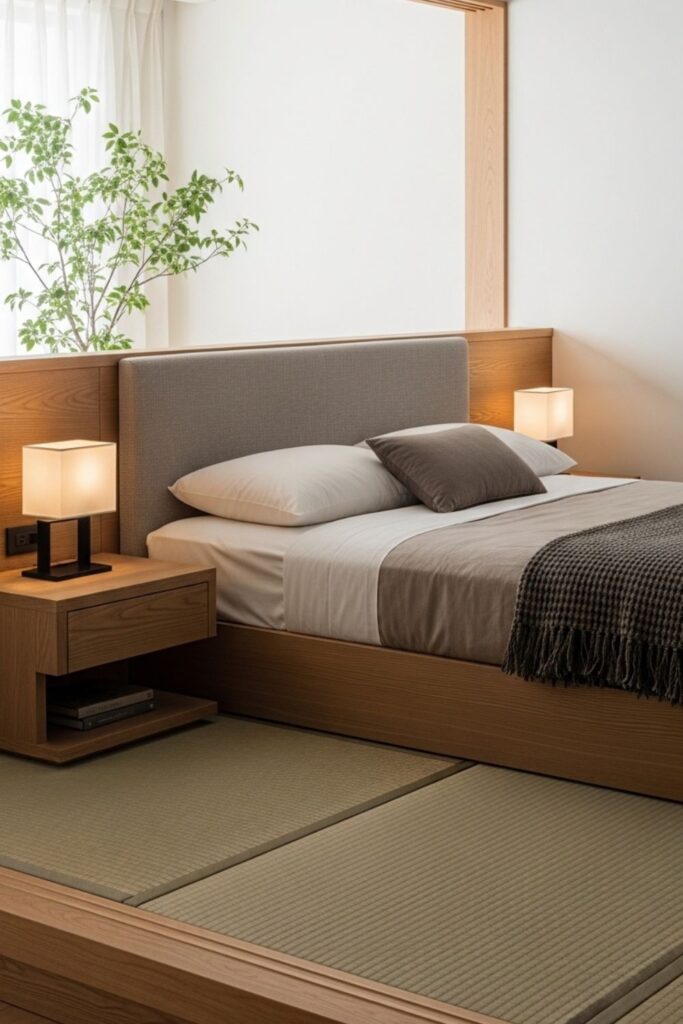
A well-designed tatami bedroom set includes a low platform, integrated bedside surfaces, and subtle lighting elements. Modern craftsmanship refines traditional proportions, ensuring the space feels contemporary rather than historical.
Natural wood tones such as ash, oak, or walnut pair beautifully with tatami textures. Upholstered headboards in neutral linen can soften the look without disrupting authenticity.
Premium modern tatami style bedroom design focuses on material harmony. The balance between woven mats, wood grain, and soft textiles creates depth without ornamentation.
6. Pinterest Inspired Tatami Bedrooms Made Practical
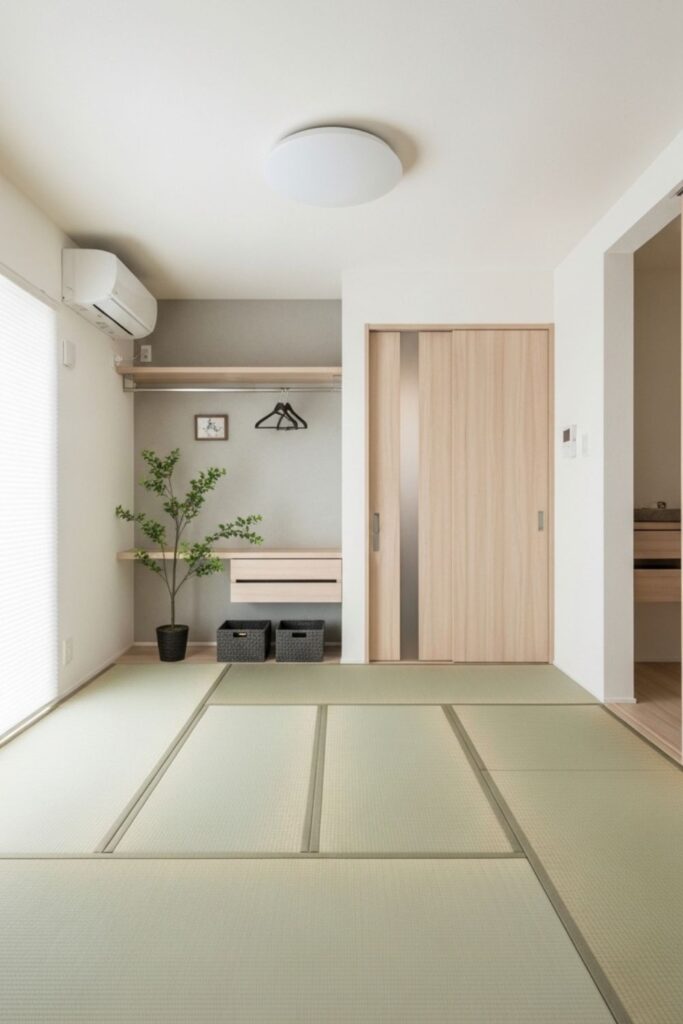
Many modern tatami bedroom ideas Pinterest showcases highlight ultra-clean, staged spaces. While visually appealing, real homes require practicality.
Instead of copying aesthetic images directly, focus on layout principles such as symmetry, light placement, and functional pathways. Storage solutions should be discreet but accessible.
True modern tatami bedroom design succeeds when inspiration meets daily usability. It should look serene on camera but feel comfortable in lived experience.
7. DIY Tatami Bedroom Enhancements for Personal Character
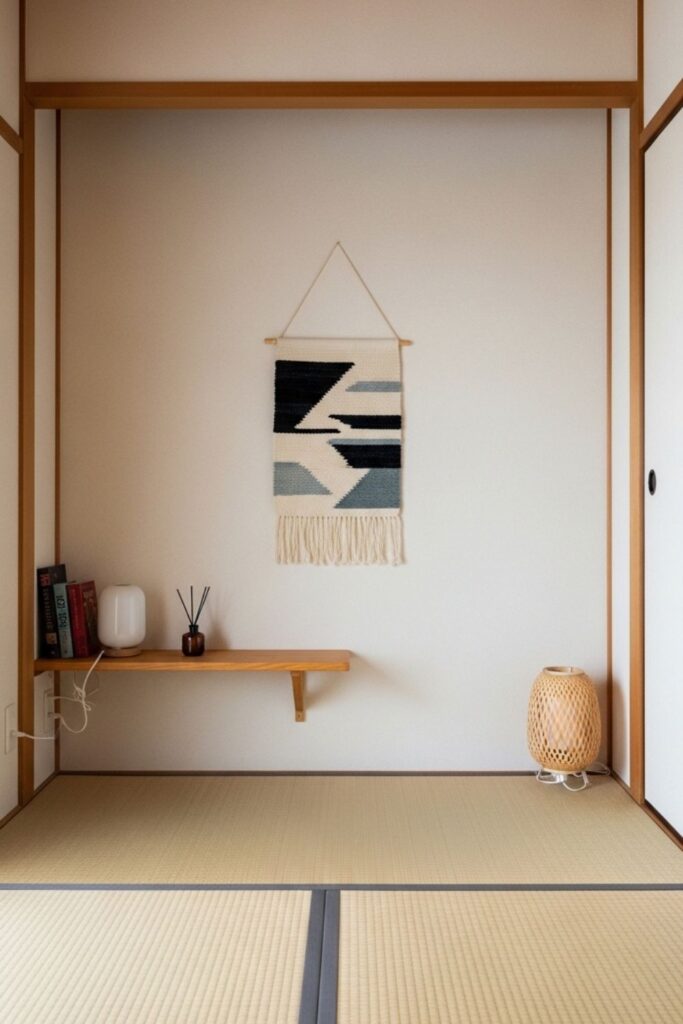
Personalization can be subtle in tatami spaces. Handmade wooden shelves, a simple woven wall hanging, or a carefully placed ceramic lamp introduce warmth without clutter.
DIY elements allow homeowners to express personality while maintaining restraint. Natural materials should dominate to preserve cohesion.
Modern tatami bedroom ideas DIY approaches work especially well for small apartments, where customization adds uniqueness without overwhelming limited space.
8. Modern Tatami Bedroom Ideas for Small Spaces
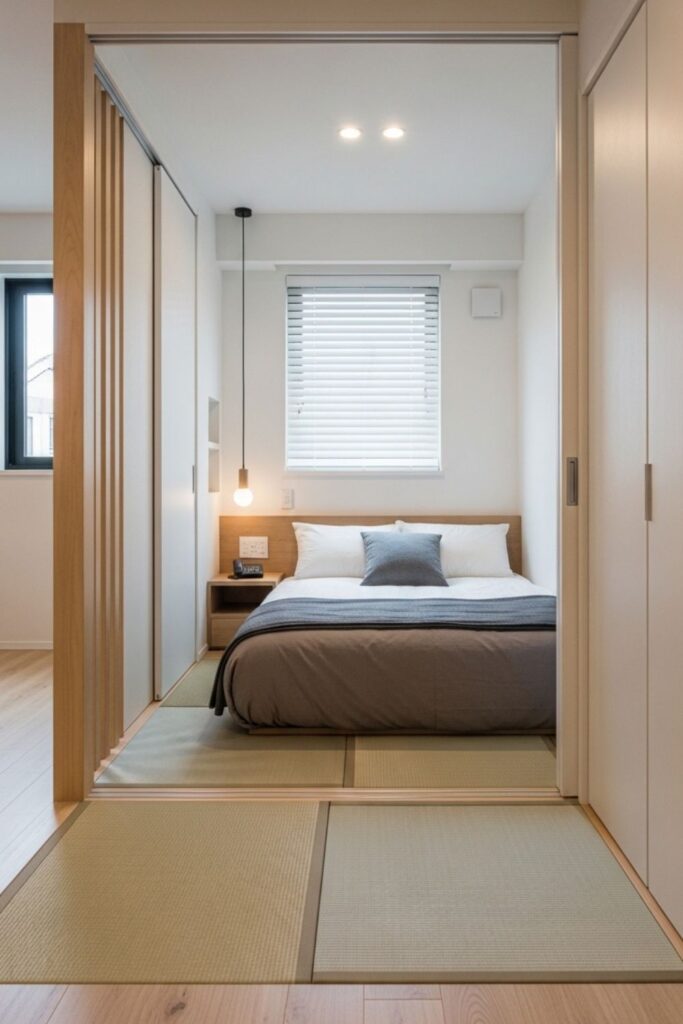
Tatami layouts are naturally suited for small rooms. By lowering the bed and minimizing furniture bulk, the room immediately feels more expansive.
Built-in niches replace large side tables. Sliding partitions eliminate door swing space. Wall-mounted lighting keeps surfaces clear.
Modern tatami bedroom design for small spaces focuses on visual lightness. When floor area remains open and continuous, even compact rooms feel breathable and calm.
9. Blending Tatami Bedroom and Living Room Design in Studios
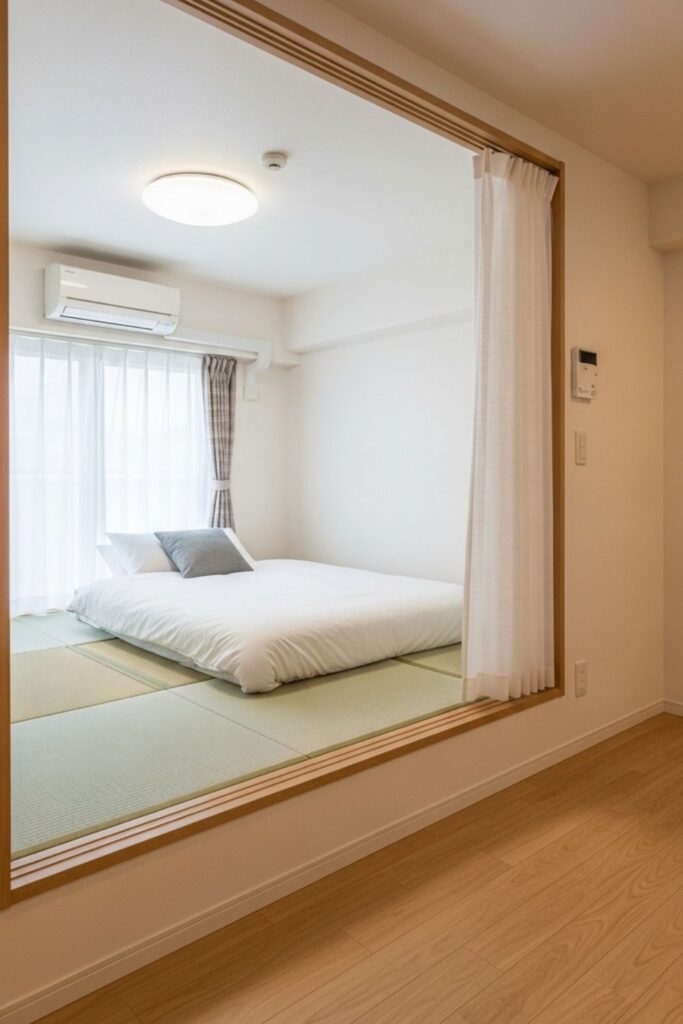
In studio apartments, tatami platforms can create a defined sleeping zone without building permanent walls. A slightly elevated tatami area subtly separates rest from social space.
This approach maintains openness while preserving privacy. Lightweight curtains or sliding screens can add flexibility.
Blending tatami bedroom and living room design is a smart urban solution that combines Japanese spatial philosophy with modern apartment efficiency.
Explore More: Click Here
10. Soft, Layered Lighting That Enhances Texture
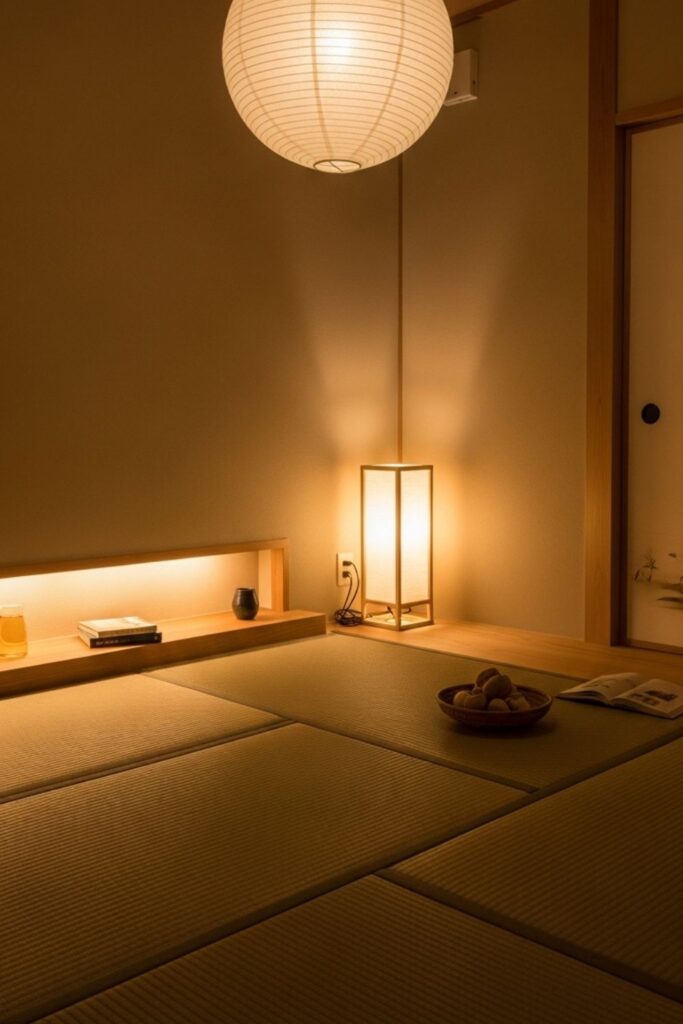
Lighting in modern tatami style bedroom design should never feel harsh. Warm ambient lighting highlights the texture of woven mats and wood surfaces.
Low floor lamps, concealed LED strips, and paper lantern-style fixtures introduce gentle illumination that supports relaxation.
Layered lighting also allows mood flexibility, transitioning the bedroom from functional daytime space to peaceful evening retreat.
11. Neutral Palettes With Subtle Contrast
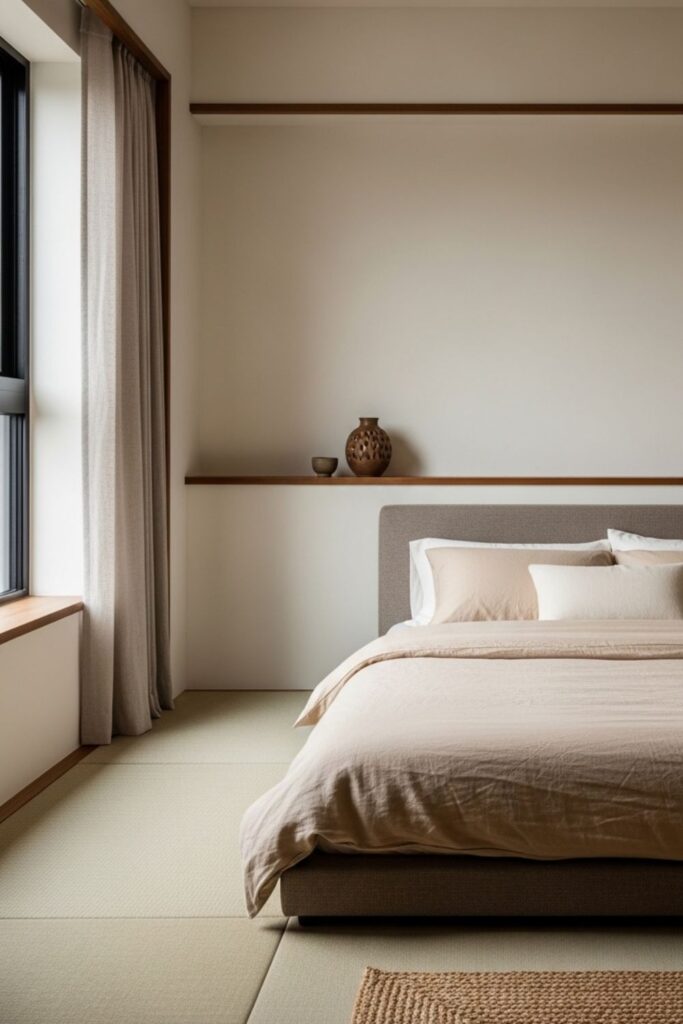
Cream, beige, warm grey, and muted earth tones define most modern tatami bedrooms. These shades amplify natural light and maintain emotional softness.
Subtle contrast can be introduced through darker wood trims or textured textiles. The key is balance rather than boldness.
A controlled palette ensures the room feels cohesive, timeless, and deeply restful.
12. Architectural Simplicity and Minimal Wall Treatment
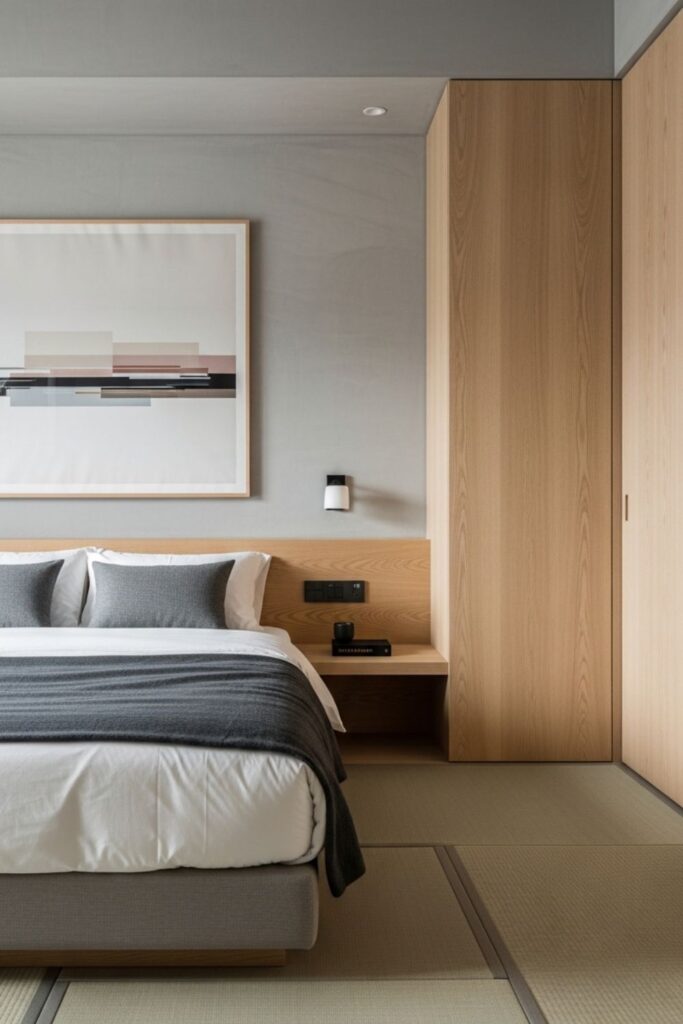
Walls in modern tatami bedroom design remain largely unadorned. Smooth plaster, light wood paneling, or single statement art pieces maintain serenity.
Over-decorating disrupts the calm narrative of the room. Architectural simplicity allows the materials themselves to become the focal point.
When walls remain quiet, the entire bedroom feels structured yet peaceful.
FAQs
What makes modern tatami style bedroom design different from traditional Japanese bedrooms?
Modern versions integrate contemporary materials, improved insulation, and hidden storage while preserving low-level layouts and natural textures.
Is tatami suitable for Western homes?
Yes. Modern tatami bedroom design adapts easily to Western interiors, especially in minimalist or Scandinavian-inspired homes.
Can tatami bedrooms work in humid climates?
With proper ventilation and moisture-resistant materials, tatami can function well in tropical climates such as Malaysia.
Are tatami bedrooms expensive?
Costs vary. Basic tatami mats are affordable, while custom platforms and integrated storage increase investment.
Does a tatami bedroom improve sleep?
Low-level layouts, natural materials, and reduced visual clutter can positively influence relaxation and sleep quality.
Conclusion: 12 Modern Tatami Style Bedroom Design Ideas
A modern tatami style bedroom design is about grounded living and intentional simplicity. By combining low platforms, natural materials, and architectural restraint, you create a bedroom that supports calmness and clarity.
This design philosophy is not driven by trends but by timeless principles of balance and proportion. Whether applied in small apartments or spacious homes, tatami interiors deliver emotional comfort and visual harmony.
Read More: 10 Small Bedroom Comfort Ideas That Reduce Stress and Improve Sleep Naturally