The bedroom is the one place where the nervous system should fully relax. In homes across the US, UK, Canada, and Australia, people are actively searching for peaceful bedroom paint color ideas because modern life feels louder, faster, and more mentally demanding than ever before. Color has a quiet but powerful effect on how the body responds to a space, especially at night when the mind is preparing for rest.
Peaceful bedroom paint colors are not about trends or dramatic statements. They are about emotional regulation. The right shade can slow racing thoughts, soften anxiety, and create a sense of safety that supports deeper sleep. That is why calming bedroom colors for adults are increasingly chosen with mental health, comfort, and long-term living in mind.
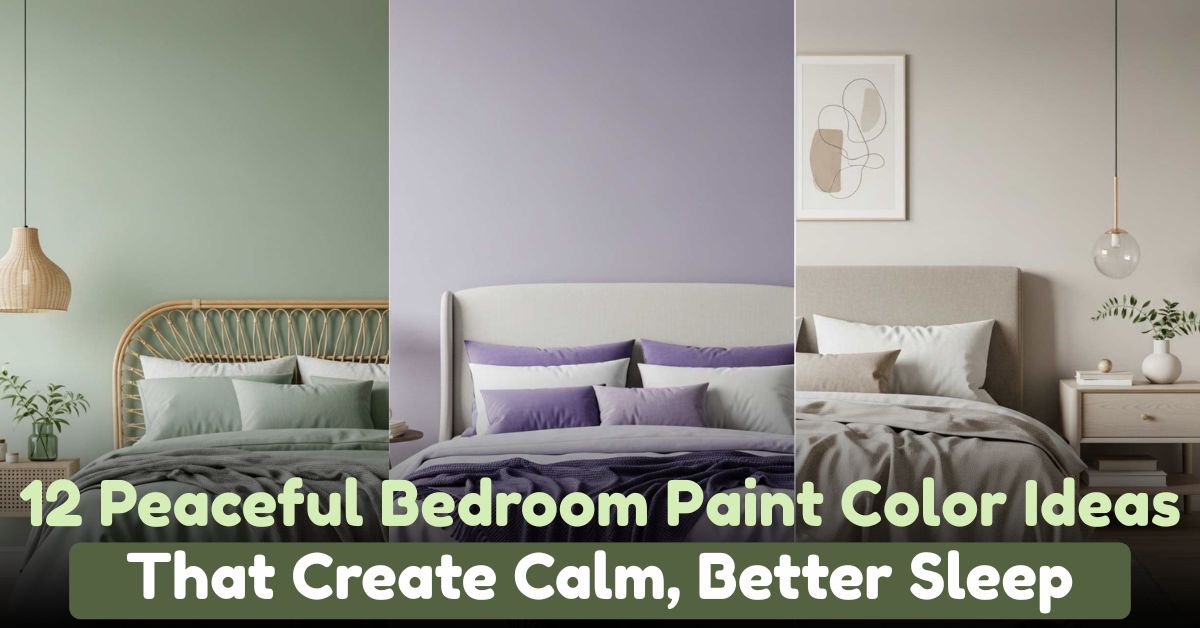
This guide explores 12 peaceful bedroom paint color ideas through a lifestyle lens. Each color is explained not only by how it looks, but by how it feels in real homes, why it supports calm living, and who it works best for. These shades are timeless, adaptable, and rooted in emotional well-being rather than short-lived trends.
12 Peaceful Bedroom Paint Color Ideas
Table of Contents
1. Soft Warm White That Feels Gentle, Not Clinical
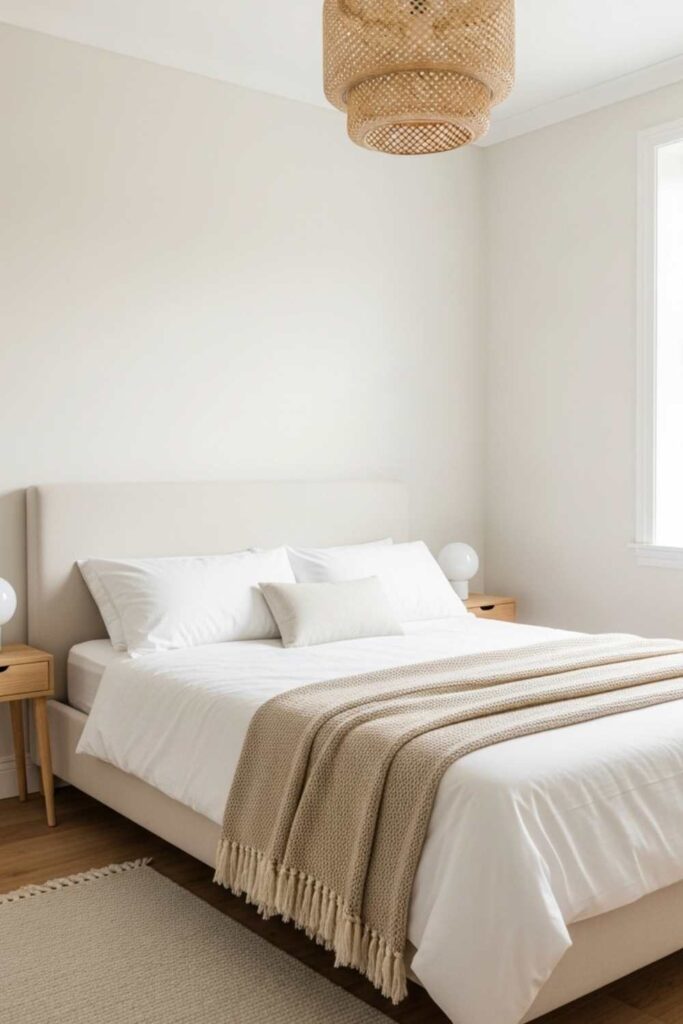
A warm white bedroom creates a sense of lightness without feeling cold. Unlike stark whites, warm whites contain subtle undertones of cream or beige that soften the walls and reduce visual tension. This makes the room feel open yet emotionally safe.
In peaceful bedroom paint color ideas, warm white works especially well for people who feel overwhelmed by color. It reflects natural light beautifully and adapts to different times of day. At night, it feels calm rather than harsh, especially when paired with warm lighting.
This color suits minimal bedrooms, small rooms, and homes where simplicity supports mental clarity and rest.
2. Pale Greige for Balanced Emotional Calm
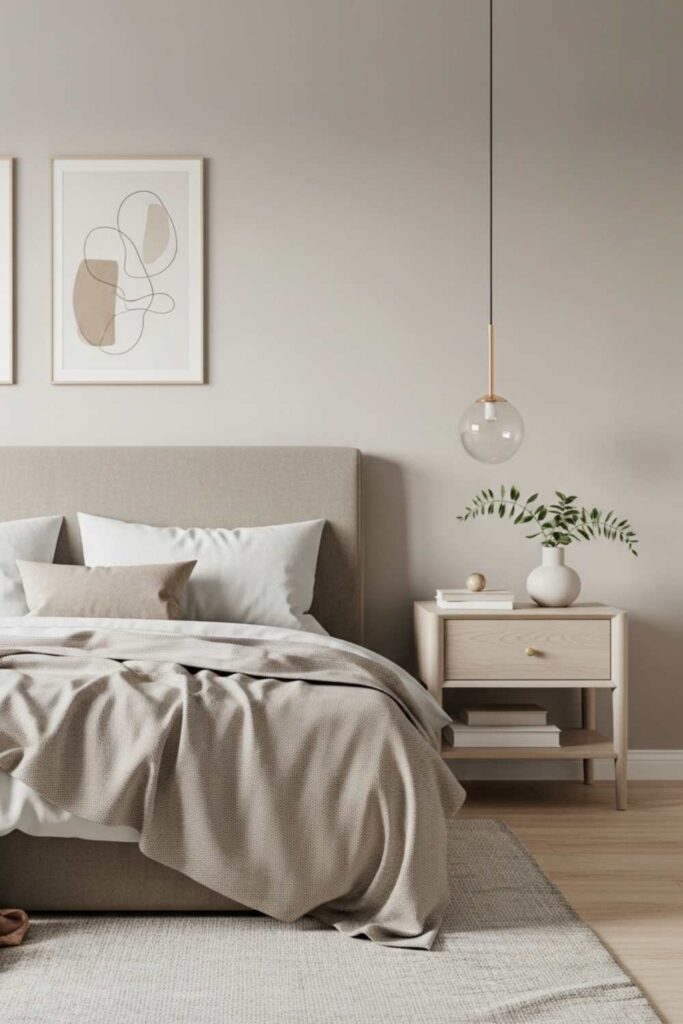
Greige sits gently between grey and beige, making it one of the most versatile peaceful bedroom paint colors. It offers structure without heaviness and warmth without darkness. This balance helps the mind feel grounded without feeling restricted.
Greige is often recommended as one of the best calming bedroom colors for adults because it reduces overstimulation. It works well for people who want neutrality but find white too empty or grey too cool.
This color is ideal for master bedrooms and shared spaces where calm and neutrality are equally important.
3. Soft Sage Green That Feels Naturally Healing
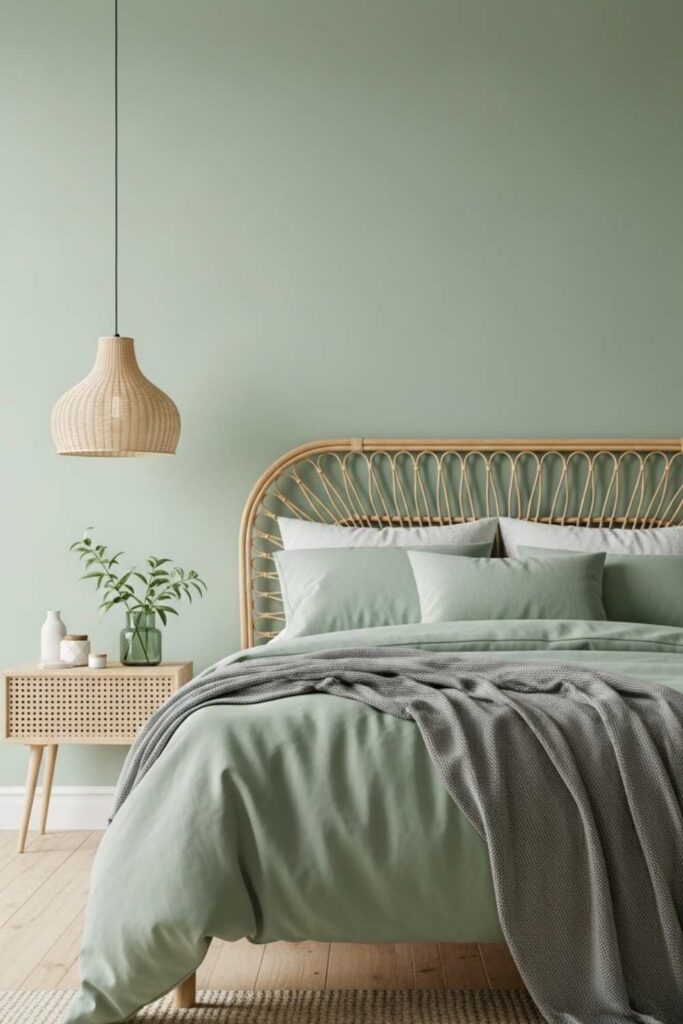
Green is deeply connected to nature, and soft sage tones are among the most effective healing colors for mental health. Sage green creates a sense of restoration and quiet balance, especially in bedrooms used for rest and recovery.
In real homes, sage green feels soothing rather than decorative. It lowers visual contrast and helps reduce anxiety, making it one of the most searched calming bedroom colors for anxiety-related concerns.
This shade works beautifully with natural materials and is ideal for people who feel emotionally refreshed by nature-inspired spaces.
4. Muted Blue That Slows the Mind
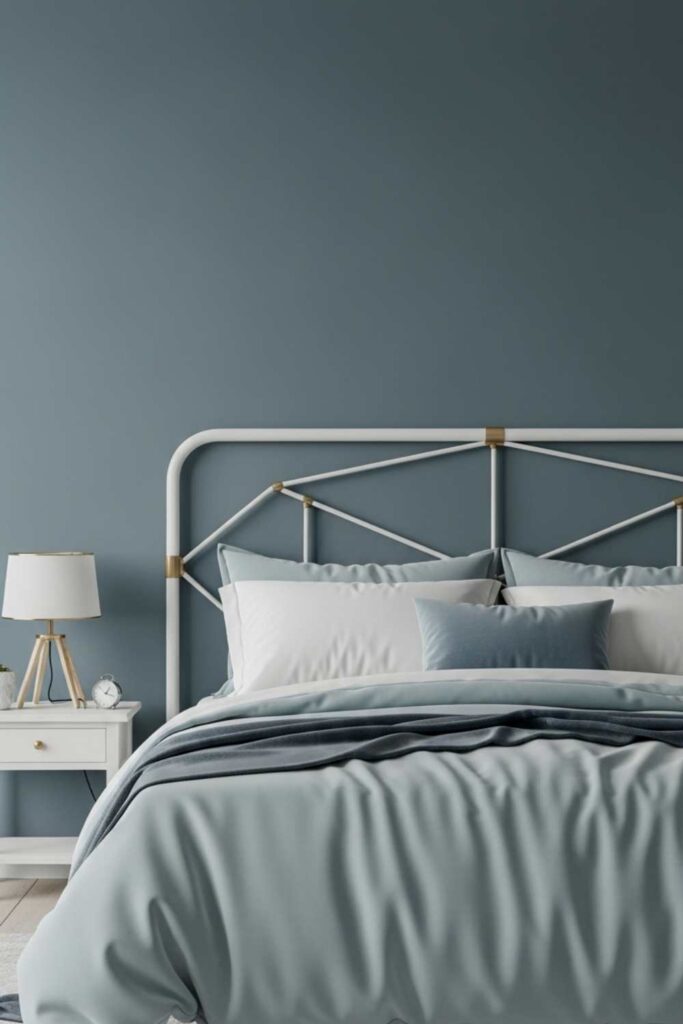
Soft, muted blues are widely recognized as calming colours for mental health. Unlike bright blues, muted blue tones feel steady and comforting. They help slow breathing and reduce mental noise before sleep.
In peaceful bedroom paint color ideas, blue works best when it has grey or green undertones. These prevent the color from feeling cold or overly energetic.
This shade suits people who struggle with restlessness at night and want a bedroom that actively supports relaxation.
5. Light Taupe for Warm, Grounded Comfort
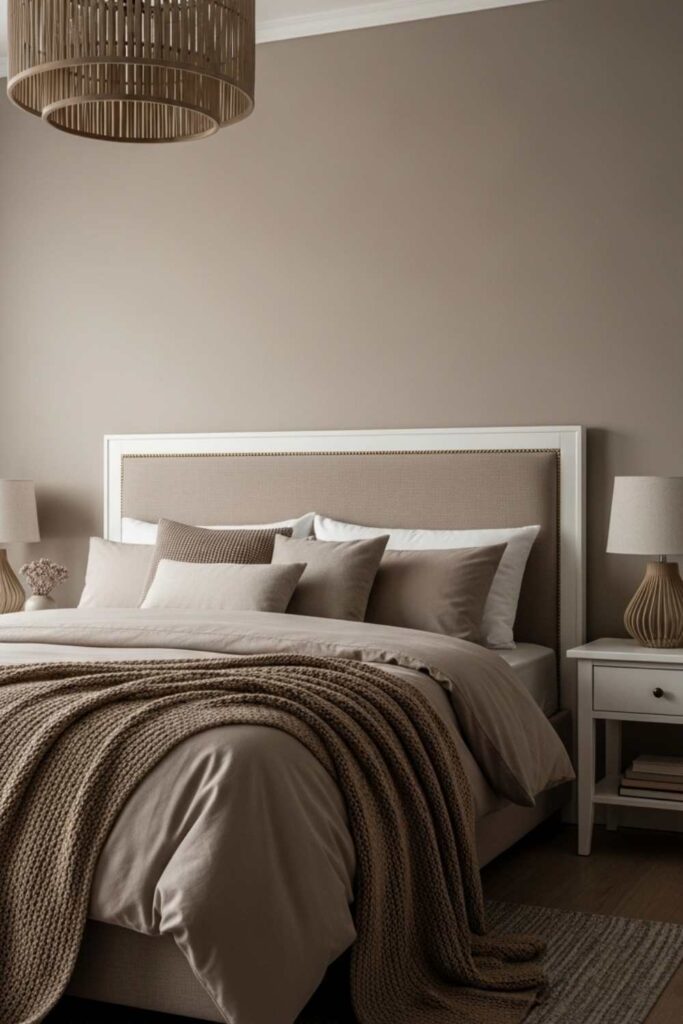
Taupe creates a quiet sense of security. It feels warm, stable, and emotionally grounding, making it an excellent choice for bedrooms meant to feel cocooning.
Light taupe is often chosen in cozy bedroom paint colors because it creates warmth without darkness. It pairs well with soft textures and low lighting, enhancing the feeling of comfort and safety.
This color is ideal for colder climates and bedrooms where warmth and calm are priorities.
6. Powdery Lavender That Calms Without Feeling Sweet
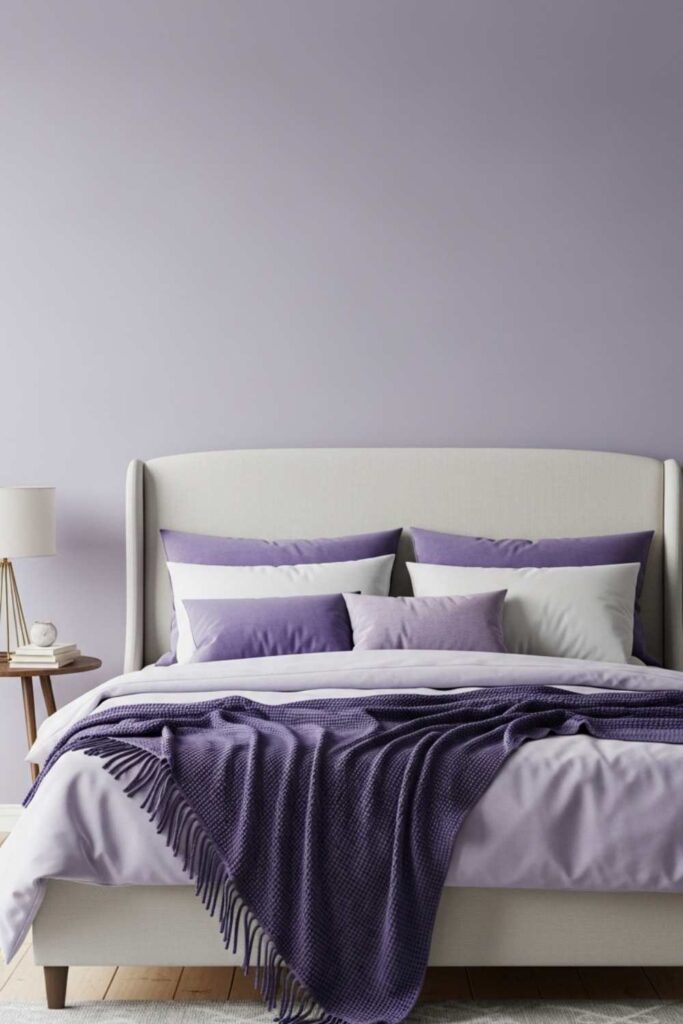
When lavender is muted and greyed, it becomes a deeply calming color rather than a decorative one. Soft lavender has been shown to support relaxation and emotional balance, making it suitable for bedrooms designed around rest.
Unlike bold purple tones, powdery lavender feels grown-up and subtle. It gently softens the room and helps ease mental tension at the end of the day.
This shade works well for adults seeking calming bedroom colors that still feel expressive and nurturing.
7. Soft Beige That Creates Emotional Safety
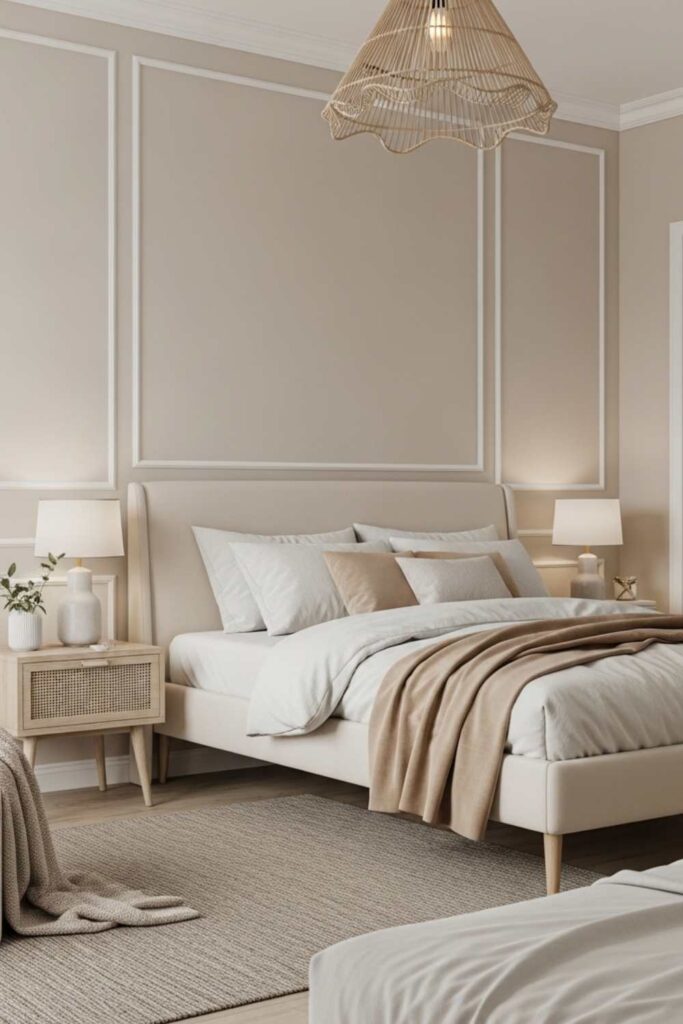
Beige is often underestimated, yet it remains one of the most comforting peaceful bedroom paint colors. Soft beige creates warmth, familiarity, and emotional stability.
In bedrooms designed for long-term living, beige helps reduce sensory overload. It supports rest by feeling predictable and safe, especially for people sensitive to visual stimulation.
This shade is ideal for shared bedrooms and homes where calm consistency matters more than trend-driven design.
8. Misty Grey That Feels Quiet, Not Cold
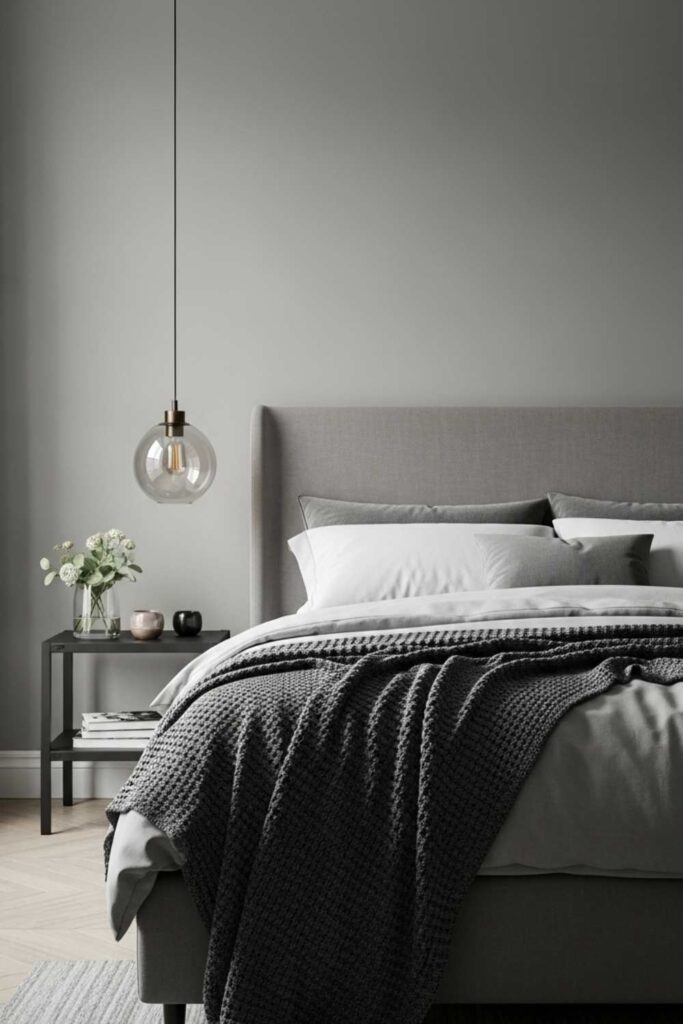
Light grey can be calming when it leans warm and soft. Misty grey tones feel airy and quiet, helping the bedroom feel uncluttered and emotionally balanced.
In calming bedroom colors for adults, grey works best when paired with warm lighting and soft textiles. This prevents the space from feeling sterile or emotionally distant.
This shade suits modern bedrooms where simplicity and calm coexist.
9. Blush Neutral for Gentle Emotional Warmth
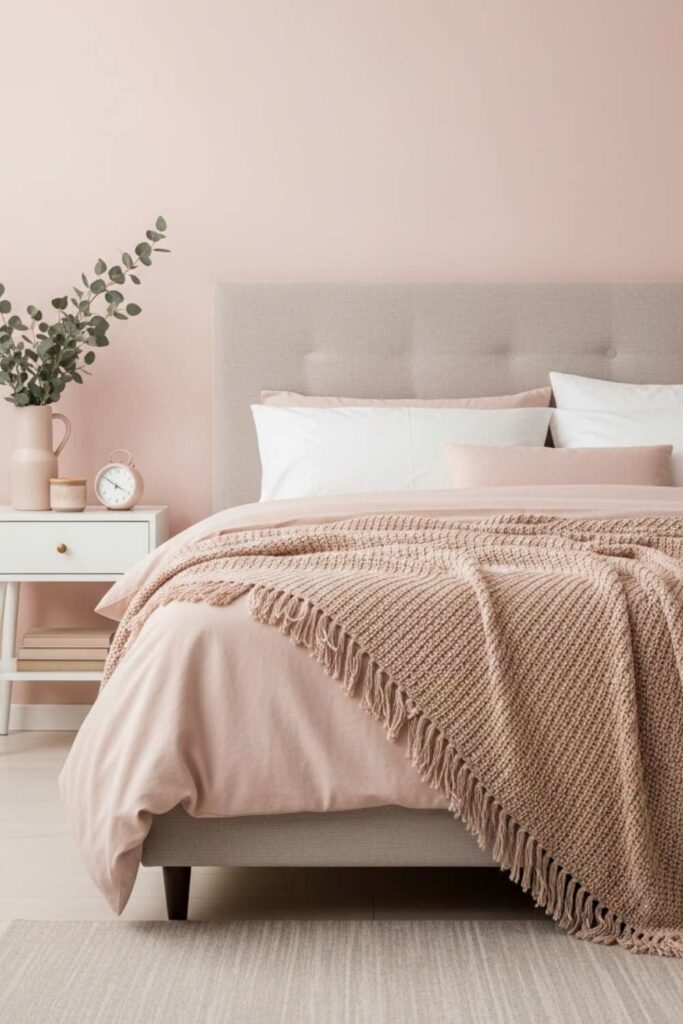
Blush neutrals with beige undertones create a soft emotional warmth that feels comforting rather than romantic. These tones support relaxation and emotional ease, especially in bedrooms used for winding down after long days.
Unlike traditional pinks, neutral blush shades feel subtle and grounding. They soften the space without demanding attention.
This color is ideal for people seeking calm with a touch of warmth and softness.
10. Muted Clay for Earthy Calm
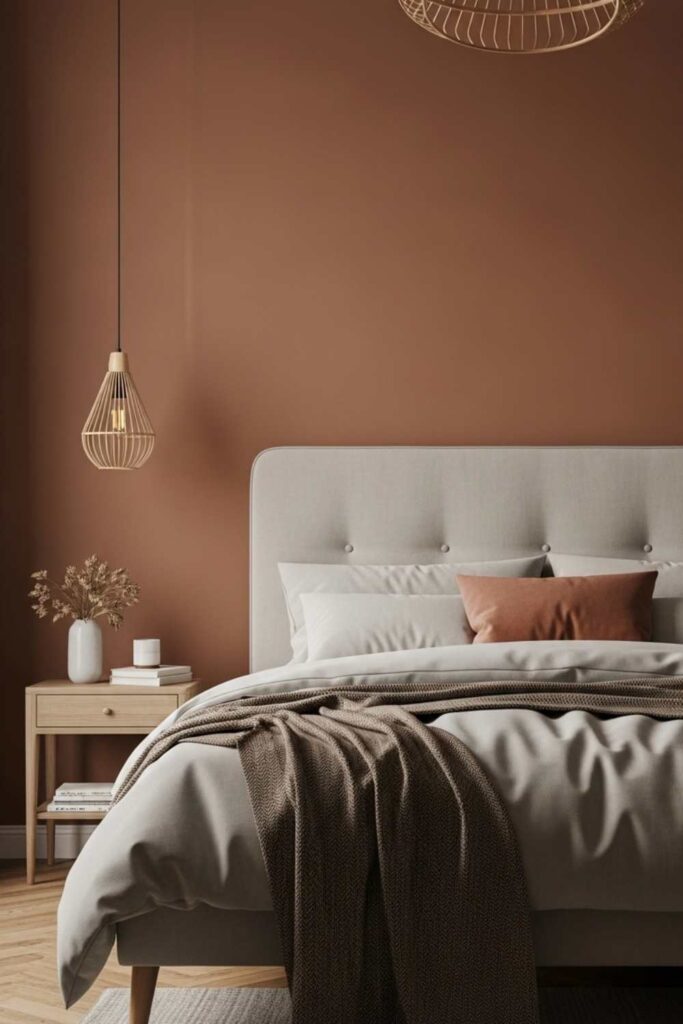
Muted clay tones bring an earthy warmth that helps the body feel grounded. These colors connect the bedroom to natural landscapes and create a sense of stability.
As calming colours for mental health, clay shades support emotional regulation and comfort. They work well in bedrooms where warmth and security are essential.
This shade suits people who feel relaxed in earth-toned environments.
11. Soft Blue-Green for Balanced Serenity
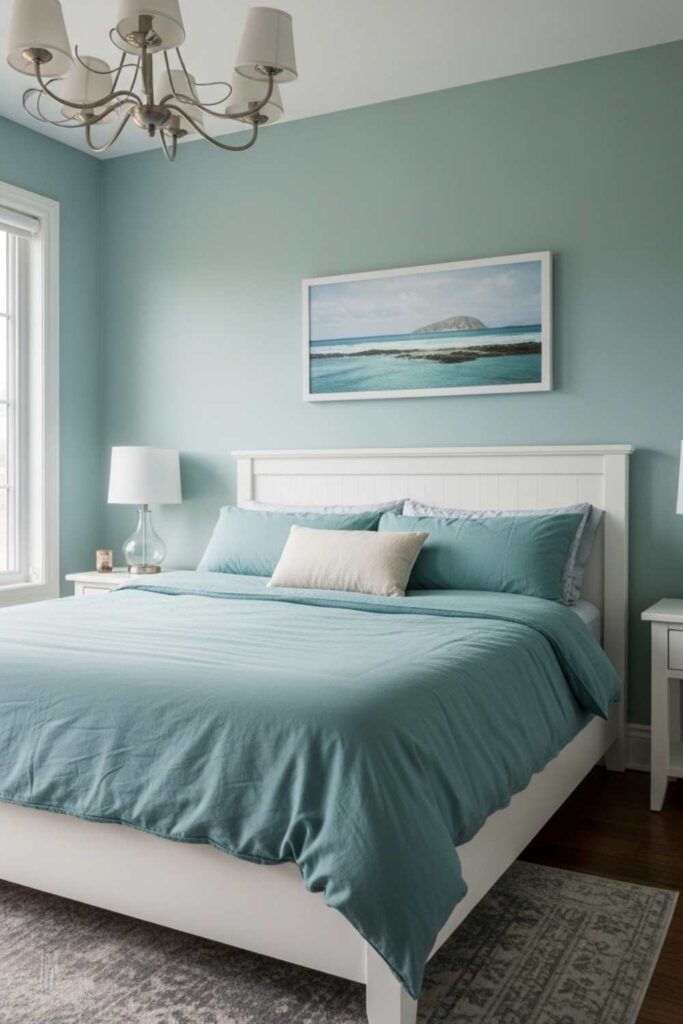
Blue-green tones combine the calm of blue with the healing qualities of green. When muted, they create one of the most effective peaceful bedroom paint color ideas for mental clarity and rest.
This shade feels refreshing without being stimulating. It supports relaxation while still feeling light and breathable.
Ideal for bedrooms with natural light and for people who want a calm yet uplifting environment.
12. Off-White With Warm Undertones for Timeless Peace
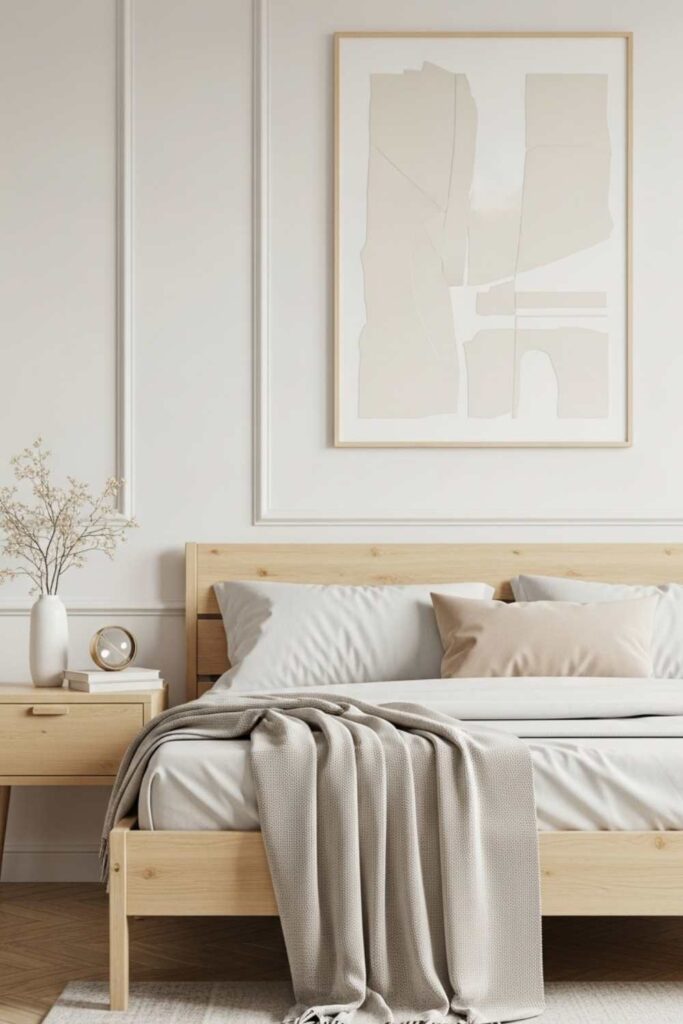
Off-white shades with subtle warmth offer the benefits of white without the harshness. They create a timeless, adaptable background that supports relaxation.
In calming bedroom colors for anxiety, off-white works well because it reduces visual stress and allows the mind to rest. It adapts easily to changes in decor and lighting.
This color suits anyone seeking long-term peace rather than seasonal change.
FAQs: 12 Peaceful Bedroom Paint Color Ideas
Which bedroom color is best for mental health
Soft greens, warm neutrals, and muted blues support emotional balance and relaxation.
Are dark colors bad for bedrooms
Not always, but lighter muted tones generally support better rest and reduced anxiety.
Can paint color really affect sleep
Yes. Color influences mood, nervous system response, and relaxation levels.
What color reduces anxiety the most
Soft sage green and muted blue are commonly associated with anxiety reduction.
Should bedrooms always be light colors
Light to medium muted tones work best, but warmth matters more than brightness.
Conclusion
Choosing the right bedroom paint color is an act of self-care. The most effective peaceful bedroom paint color ideas are not about style statements but about emotional support. When color aligns with how the mind and body rest, the bedroom becomes a place of recovery rather than stimulation.
Soft, muted, and warm tones help reduce anxiety, slow mental activity, and create a sense of safety. Whether you choose sage green, warm beige, or misty grey, the goal is the same: a bedroom that gently supports rest, comfort, and emotional well-being every night.
Read More: 10 Bedroom Decor for Small Rooms That Feel Stylish, Confident, and Well Curated