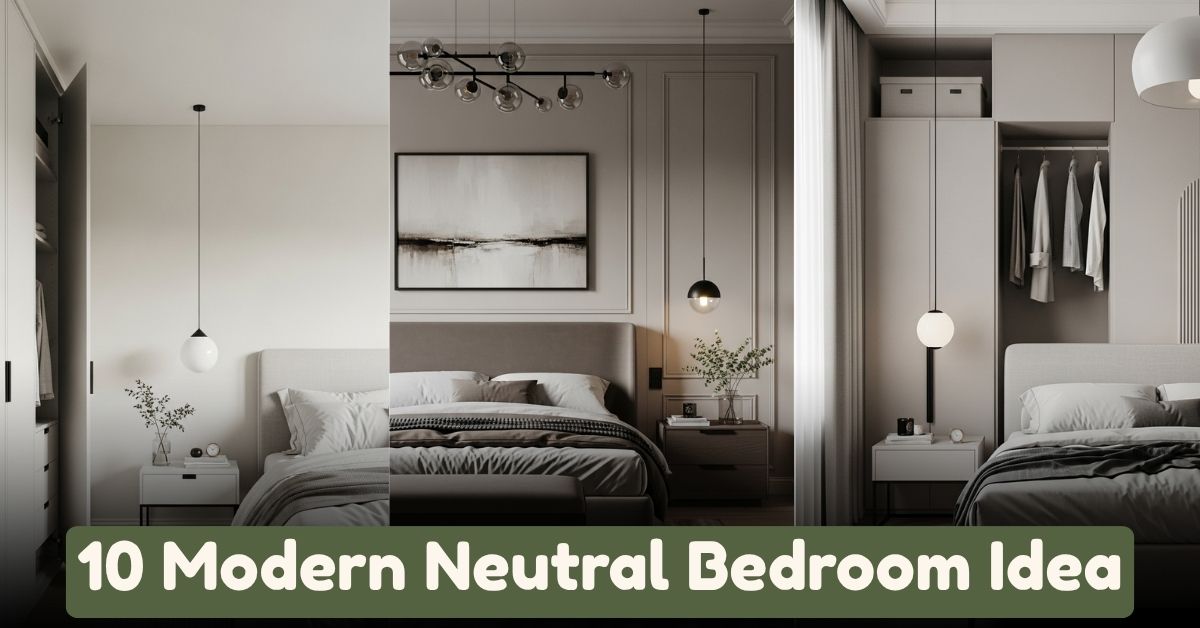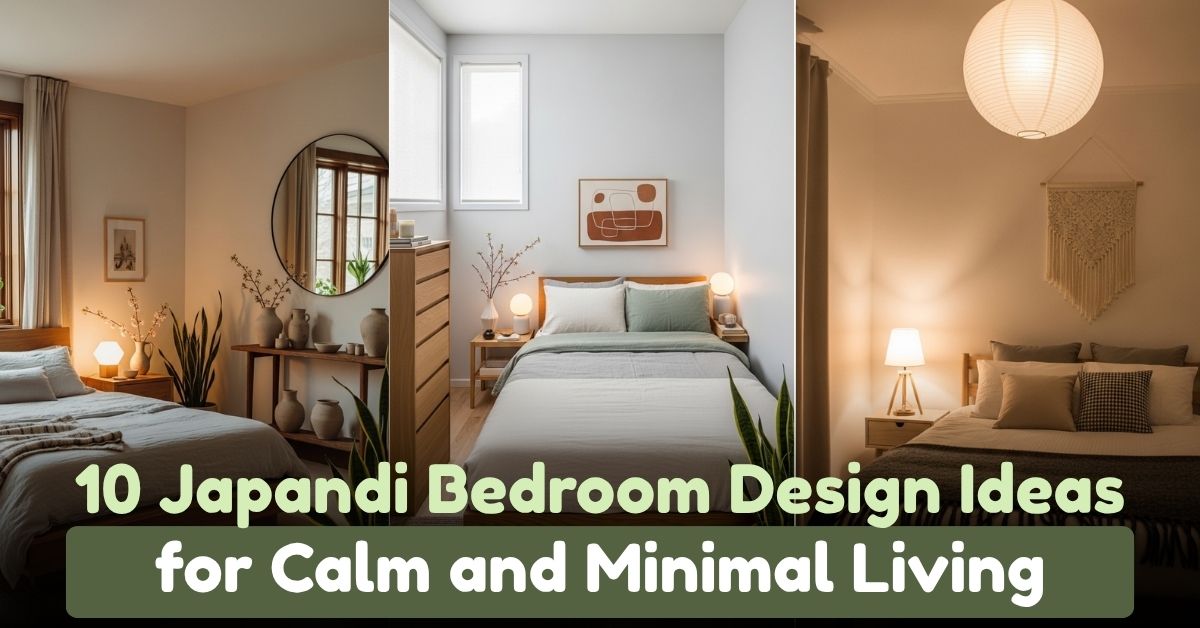
Sleep quality is influenced by more than just a mattress. The atmosphere of a bedroom plays a powerful role in how quickly the mind relaxes and how deeply the body rests. Lighting, color, layout, and texture all contribute to creating a bedroom environment for good sleep that truly supports restful nights.
Modern relaxing bedroom ideas focus on calmness, simplicity, and comfort. Instead of heavy decoration or overwhelming design choices, today’s approach prioritizes soft lighting, breathable materials, and clutter-free layouts that support mental relaxation and physical comfort. The goal is creating a space that naturally encourages the mind to wind down and the body to rest deeply.
Below are carefully designed relaxing bedroom ideas for better sleep, each explained in a practical and realistic way so they can be applied in both small rooms and master bedrooms. These are not trends that will fade—they are timeless principles rooted in how our bodies and minds respond to our surroundings.
10 Relaxing Bedroom Ideas for Better Sleep

Table of Contents
1. Soft Lighting That Signals the Body to Rest
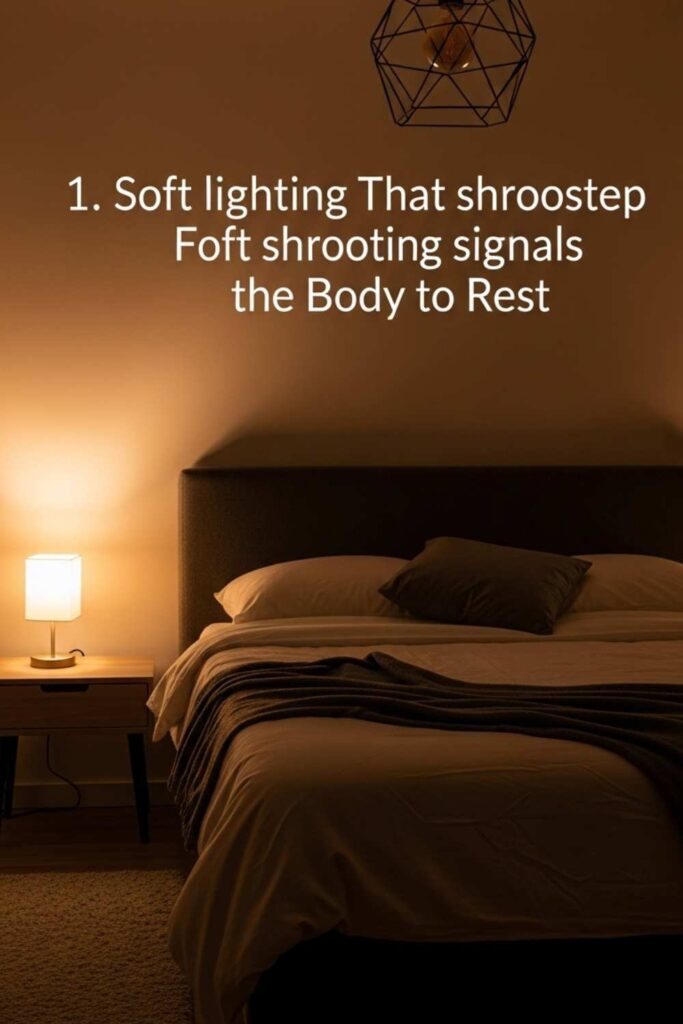
Lighting is one of the strongest environmental signals for sleep. Our bodies are designed to respond to light, with bright light keeping us alert and dim, warm light preparing us for rest. Harsh overhead ceiling lights keep the brain in active mode, while warm bedside lamps and indirect lighting help the body transition into sleep mode naturally.
Layered lighting creates a gradual transition from activity to relaxation throughout the evening. A relaxing bedroom sanctuary often uses dimmable lights or warm bulbs in the 2700K to 3000K range that mimic sunset tones. This warmer light reduces eye strain and helps regulate the natural circadian rhythm that controls our sleep-wake cycle.
Consider using multiple light sources at different heights—a bedside table lamp, a wall sconce, or even battery-operated candles. This allows you to control the brightness and create zones of soft light that feel calming rather than stimulating. Even in small bedrooms, a simple bedside lamp or wall-mounted reading light can completely change how the space feels in the evening, making sleep come more naturally and peacefully.
2. Calm Neutral Colors That Reduce Mental Noise

Color psychology plays a quiet but powerful role in sleep quality and mental relaxation. Our brains process visual information constantly, and certain colors create calm while others stimulate activity. Shades like warm white, soft beige, pale grey, muted sage, and gentle blue-grey create a calming bedroom design that reduces visual stress and mental noise.
Bright or highly saturated colors can stimulate the mind and increase alertness, which is why most relaxing bedroom ideas for small rooms rely on soft palettes that feel airy, gentle, and emotionally neutral. These softer tones don’t demand attention or create visual tension—they simply exist peacefully in the background.
Neutral colors also reflect light softly rather than creating harsh contrasts, making the room feel open and peaceful. This gentle quality naturally encourages relaxation and helps the mind shift from daytime alertness to nighttime rest. When choosing paint colors or bedding, consider how the shade feels in both natural daylight and evening lamplight, as this affects the overall atmosphere dramatically.
3. A Clutter-Free Layout That Feels Light and Open
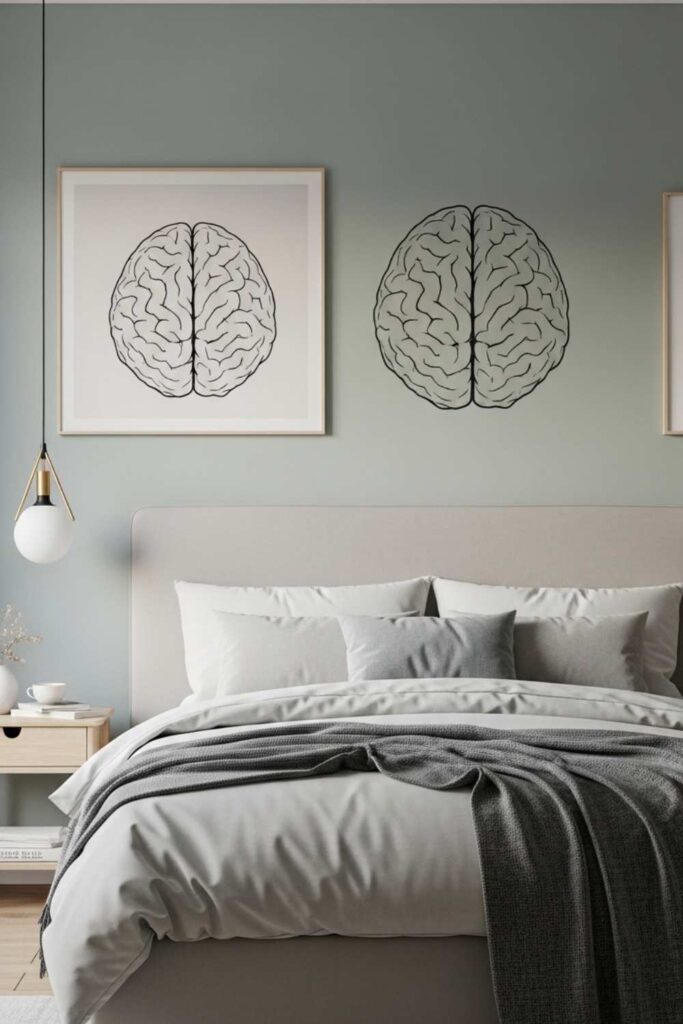
Clutter creates visual tension that the mind processes subconsciously. When the bedroom feels crowded with objects, furniture, or visible mess, the brain stays slightly alert instead of relaxing fully. A clean, organized layout allows the mind to slow down and settle into rest mode more easily.
Modern bedroom environment ideas focus on keeping surfaces simple and storage solutions hidden or minimal. Fewer visible objects mean fewer distractions competing for mental attention. This doesn’t mean the room should feel empty or cold—it means being intentional about what remains visible and ensuring each item has purpose and meaning.
A minimalist layout does not mean sacrificing personality or warmth. It simply means that every item has purpose and space to breathe. Clear nightstands, organized closets, and hidden storage for daily items create a sense of order that translates directly into mental calmness. When you enter a clutter-free bedroom at the end of a long day, the visual simplicity signals to your brain that this is a space for rest, not for activity or stress.
4. Comfortable Bedding That Supports Deep Sleep

The quality of bedding directly affects sleep comfort and temperature regulation throughout the night. Soft, breathable bedding made from natural fabrics like cotton, linen, or bamboo regulates temperature naturally and feels gentle against the skin, preventing night sweats or feeling too cold.
Layering textures creates both visual appeal and practical comfort—a light quilt or duvet, soft pillows in varying densities, and a warm throw at the foot of the bed make the bed inviting without feeling heavy or overwhelming. This layered comfort encourages the body to relax faster and settle into sleep more naturally.
One of the most effective things to put in your bedroom to help you sleep is high-quality bedding that feels calm and breathable. The investment in good sheets, a supportive pillow, and a comfortable duvet pays dividends every single night. Choose bedding in neutral or soft colors that complement your calming color palette, and opt for materials that feel pleasant to touch—this sensory comfort is essential for deep, restorative sleep.
5. Gentle Curtains That Control Light Naturally
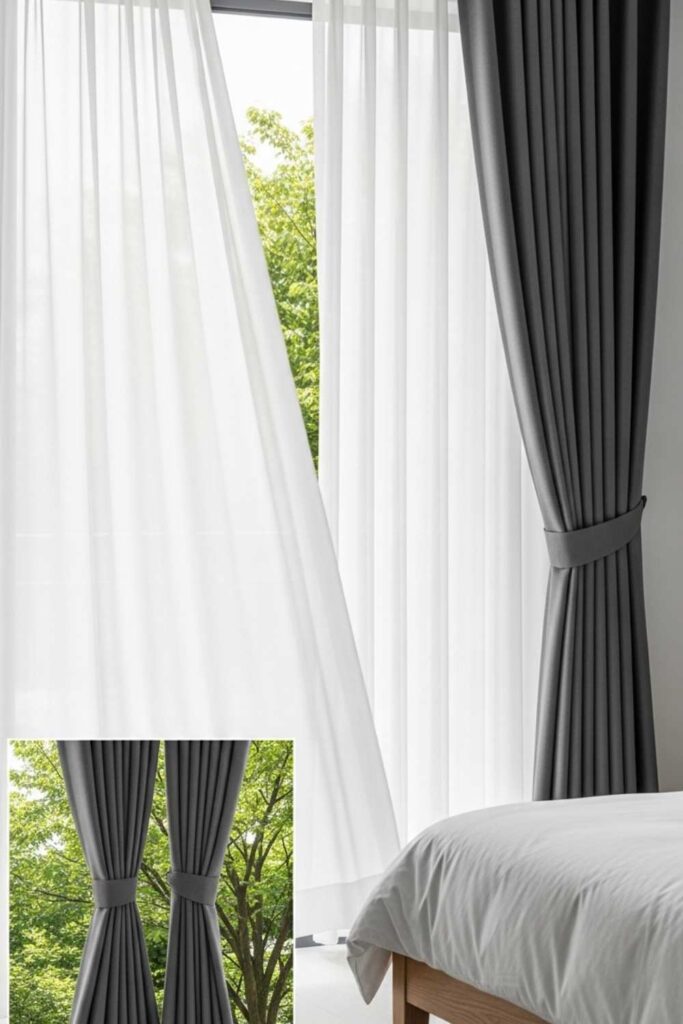
Natural light exposure during the day helps regulate our circadian rhythms and sleep cycles, but at night the bedroom should feel dark, restful, and protected from outside light pollution. Curtains play an important dual role in controlling brightness while adding softness and texture to the room.
Sheer curtains during the day allow natural light to filter in gently while maintaining privacy, and heavier curtains drawn at night create the darkness necessary for deep sleep. This flexible setup works especially well in modern relaxing bedroom design, where adaptability and function meet aesthetic appeal.
Soft fabrics in warm neutrals—linen, cotton canvas, or velvet—also add texture to the room, making the space feel warmer, more finished, and more comfortable. Floor-length curtains create vertical lines that make ceilings feel higher while framing windows as intentional design elements rather than afterthoughts. The gentle movement of curtain fabric also softens the hard edges of walls and windows, contributing to the overall sense of calm.
6. Small Plants That Bring a Calm Natural Feel
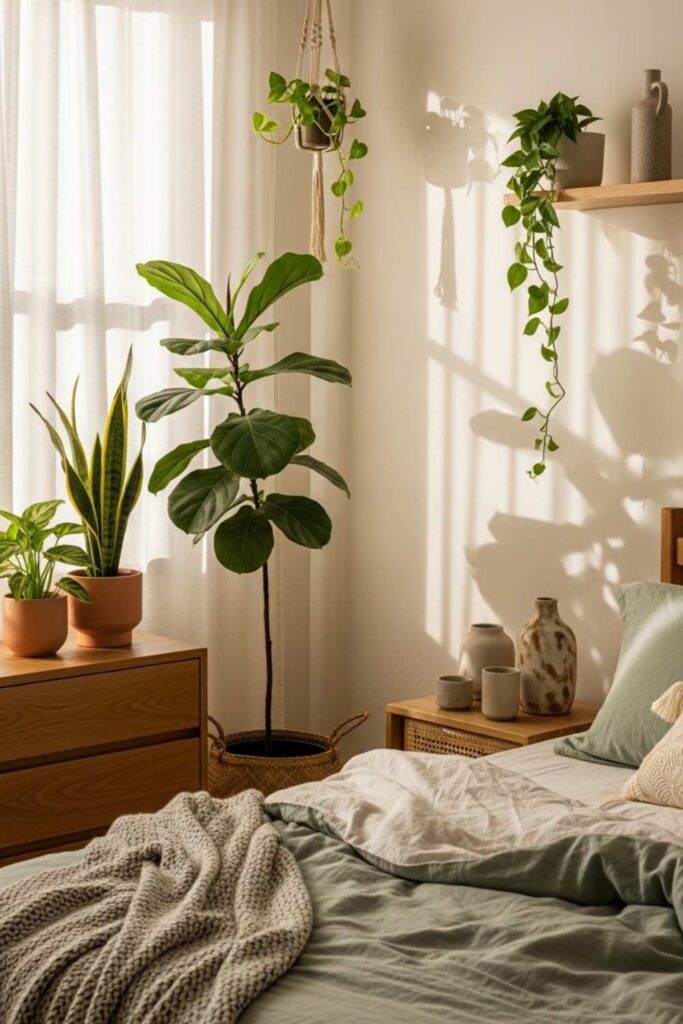
A touch of greenery can make a bedroom feel fresh, grounded, and connected to nature. Plants soften the environment visually, introduce life and gentle movement, and can even improve air quality in subtle ways. This natural element brings psychological comfort that artificial décor cannot replicate.
Low-maintenance plants such as snake plants, pothos, peace lilies, or small succulents are often used in sleep-friendly bedroom design because they require little care, thrive in low light, and add beauty without demanding constant attention. Some plants, like snake plants, even release oxygen at night rather than only during the day.
Even a single plant on a nightstand, dresser, or shelf can make the space feel more alive, peaceful, and human. The presence of living things creates a subtle psychological effect—a reminder of natural rhythms and organic beauty that helps us feel more grounded and less stressed. Choose plants that fit your lifestyle and light conditions, keeping them simple and manageable to avoid adding stress instead of calm.
7. Quiet Storage Solutions That Keep Surfaces Clear

Hidden or minimal storage helps maintain a peaceful atmosphere by keeping everyday items organized and out of sight. When clutter is contained, the room feels calmer, and the mind can rest more easily without visual distractions or reminders of unfinished tasks.
Modern relaxing bedroom ideas often use under-bed storage drawers, floating shelves with baskets, or built-in wardrobes to reduce visible clutter while keeping essentials accessible. This approach works especially well in small rooms, where visual simplicity makes the space feel larger and more breathable.
Consider multi-functional furniture like ottomans with hidden storage, bed frames with built-in drawers, or wall-mounted shelving that keeps the floor clear. The goal is creating a bedroom where everything has a designated place, making it easy to maintain order without effort. This organizational calm translates directly into mental calm when you’re trying to unwind at night.
8. Soft Rugs That Add Warmth and Comfort
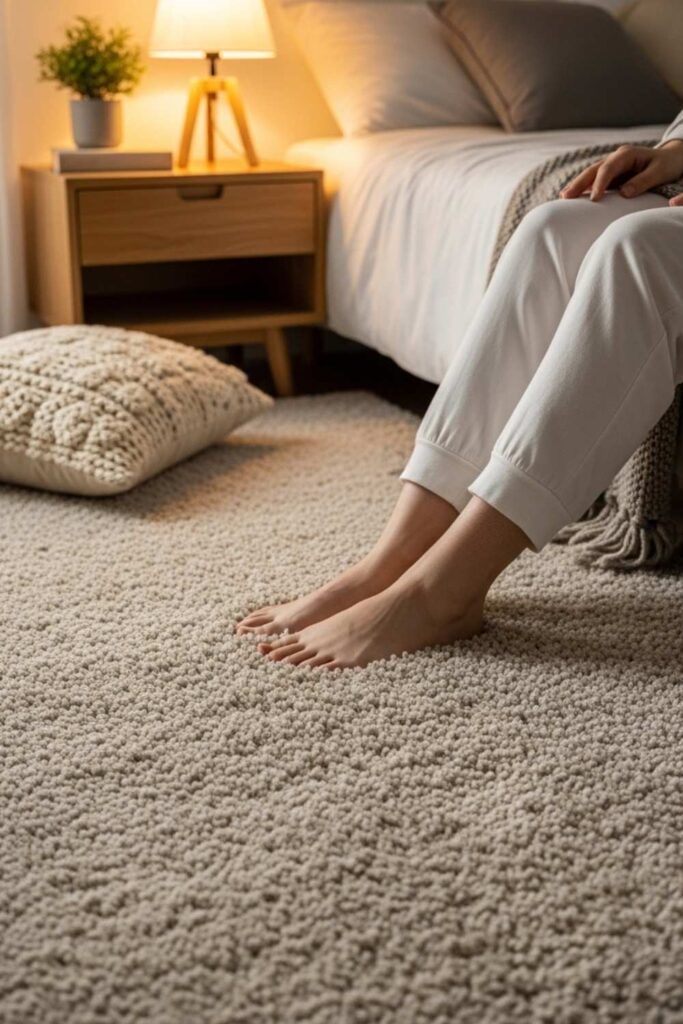
Cold floors can make a room feel less inviting and even disrupt the cozy atmosphere you’re trying to create. A soft rug adds both warmth and comfort underfoot, making the bedroom feel cozy, restful, and complete. This tactile comfort matters more than many people realize.
Neutral or textured rugs in materials like wool, cotton, or jute blend naturally into calming bedroom ideas and enhance the feeling of softness throughout the space. A rug placed beside the bed or layered under it creates a designated zone that feels intentional and grounding.
Stepping onto a soft surface when you get out of bed in the morning or prepare for sleep in the evening adds a subtle sense of comfort that improves the overall experience of the room. This small sensory detail contributes to the feeling that your bedroom is a sanctuary designed for comfort and care.
9. A Relaxing Corner for Reading or Quiet Time
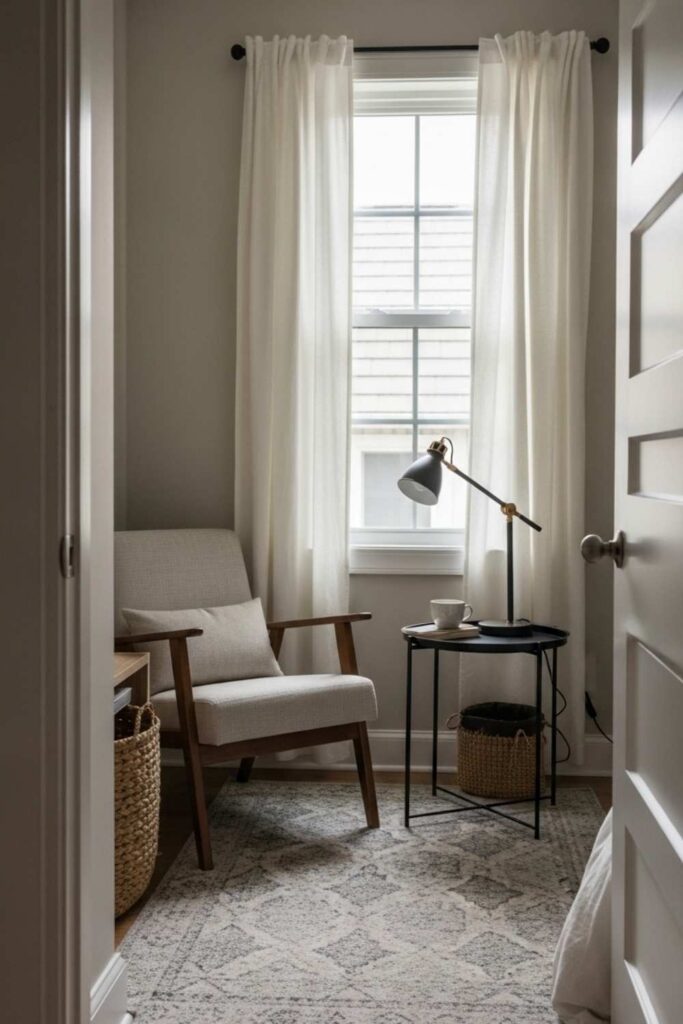
Creating a small reading nook or quiet corner helps separate relaxation activities from screen time and work. This dedicated space encourages healthier evening routines that support better sleep. A comfortable chair, a small side table, and a reading lamp are often all you need.
This quiet corner becomes a place for winding down before sleep—reading, journaling, meditating, or simply sitting in stillness. These calm activities signal to your brain that it’s time to transition from the day’s demands to nighttime rest, improving sleep quality over time.
Many relaxing bedroom sanctuary designs include a space dedicated to these calm activities rather than placing TVs or work desks in the bedroom. This intentional separation helps maintain the bedroom’s primary purpose as a place for rest and peace, not productivity or stimulation.
10. Personal Details That Feel Calm, Not Distracting
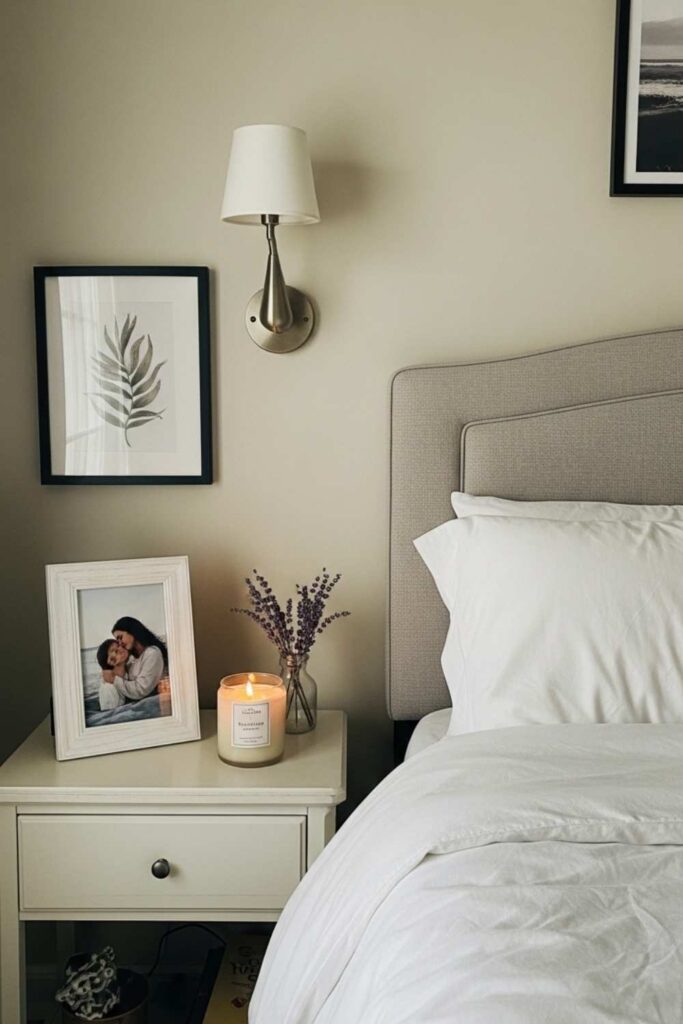
Personal items make a bedroom feel meaningful and emotionally connected to you, but too many objects can feel overwhelming and create the opposite effect. The key is thoughtful selection—choosing items that bring genuine comfort without adding visual noise or mental clutter.
A framed photo from a peaceful memory, a favorite candle in a calming scent like lavender or vanilla, or a simple piece of artwork that resonates emotionally can add warmth and personality without creating chaos. These meaningful touches make the space yours while maintaining the calm atmosphere essential for sleep.
Sleep-friendly bedroom design focuses on emotional comfort, where the space feels personal yet peaceful. This balance between meaning and simplicity is what transforms a generic bedroom into a true sanctuary that supports both rest and well-being.
Conclusion
Creating a better sleep environment is not about expensive renovations or complete redesigns. Small, intentional design choices such as lighting quality, color selection, texture layering, and thoughtful layout can significantly improve how a bedroom feels at night and how well you sleep within it.
Relaxing bedroom ideas for better sleep focus on calmness, comfort, and simplicity—principles that support the body’s natural need for rest. When the room supports sleep naturally through its design and atmosphere, falling asleep becomes easier, sleep quality improves, and waking up feels more refreshing and restorative.
Read More: 10 Modern Bedroom Designs for Small Rooms That Feel Stylish, Spacious, and Calm