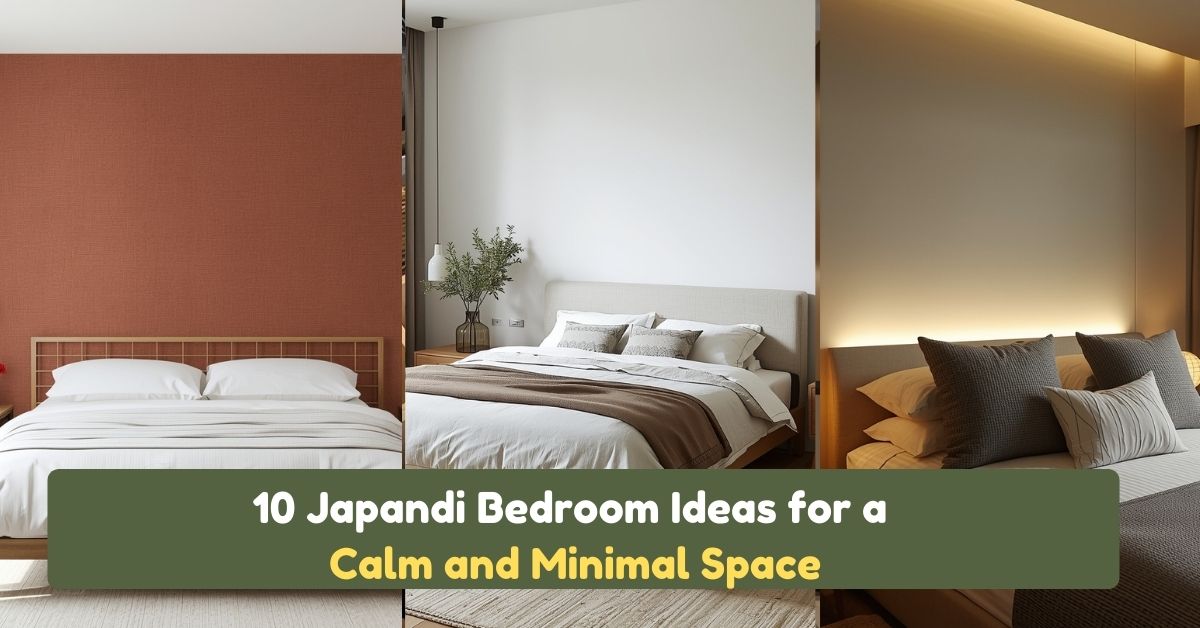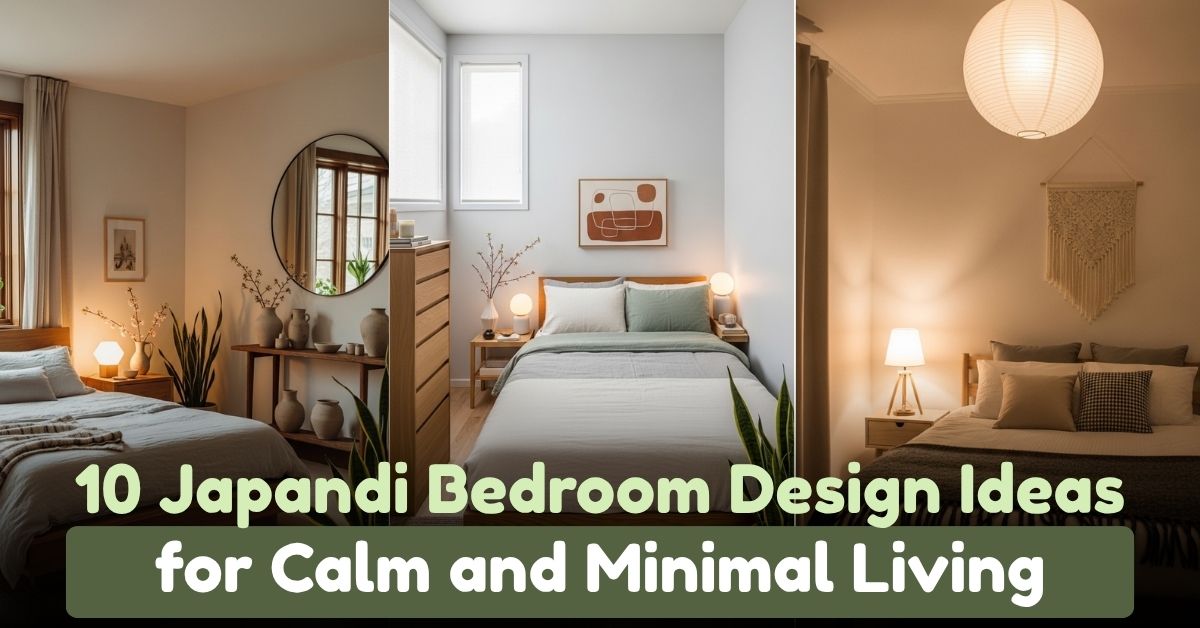
Modern bedrooms are slowly moving away from heavy décor and overstimulation. Across the USA, UK, Canada, and Australia, homeowners are choosing spaces that feel calm, grounded, and easy to live in. This shift has made Japandi bedroom design ideas one of the most sought-after styles in recent years. By blending Japanese simplicity with Scandinavian warmth, Japandi creates bedrooms that feel both minimal and deeply comforting.
A Japandi bedroom is not empty or cold. It is intentional. Every element is chosen with care, from the colour palette to the texture of materials. The focus is on balance, natural light, and emotional calm. This makes Japandi especially suitable for modern homes where bedrooms need to support rest, clarity, and daily recovery.
These Japandi bedroom design ideas are designed for real living. Whether your space is large or compact, they help create a bedroom that feels peaceful, functional, and quietly elegant.
10 Japandi Bedroom Design Ideas

Table of Contents
1. Neutral Colour Palettes That Feel Soft and Grounded
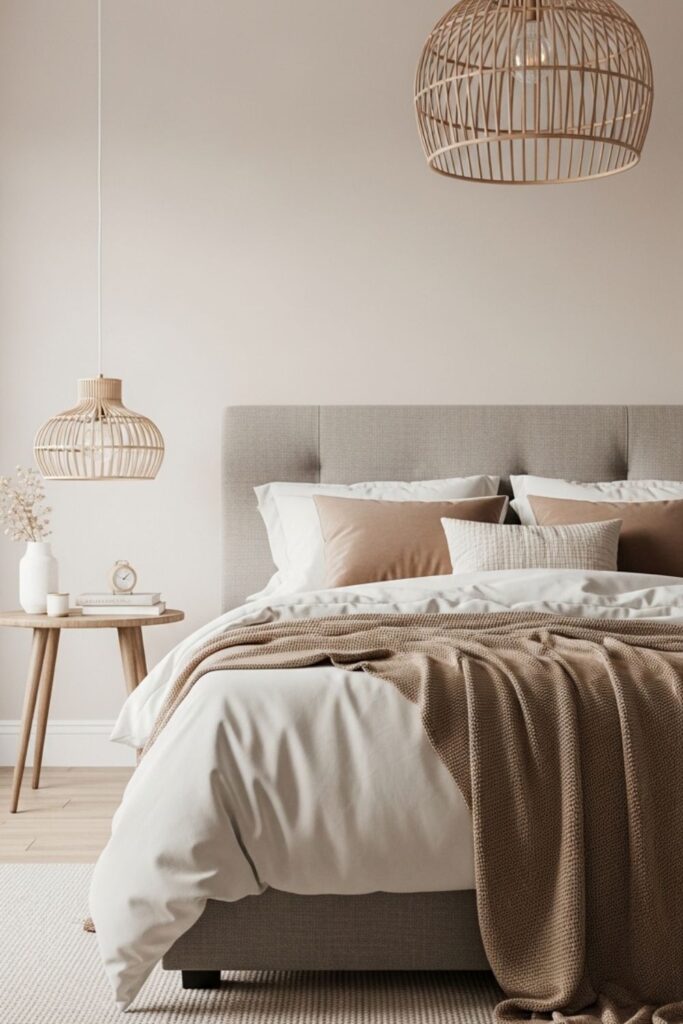
Colour is the foundation of Japandi design. Soft neutrals such as warm white, beige, taupe, and muted grey create a calm visual base. These tones reduce noise and allow the mind to relax naturally.
In Japandi bedroom ideas Pinterest inspiration, colours are rarely contrasted sharply. Instead, they flow into one another, creating a sense of continuity. This helps even small bedrooms feel open and uncluttered.
The result is a bedroom that feels balanced rather than styled. It supports calm living without demanding attention.
2. Low-Profile Furniture for a Relaxed Atmosphere
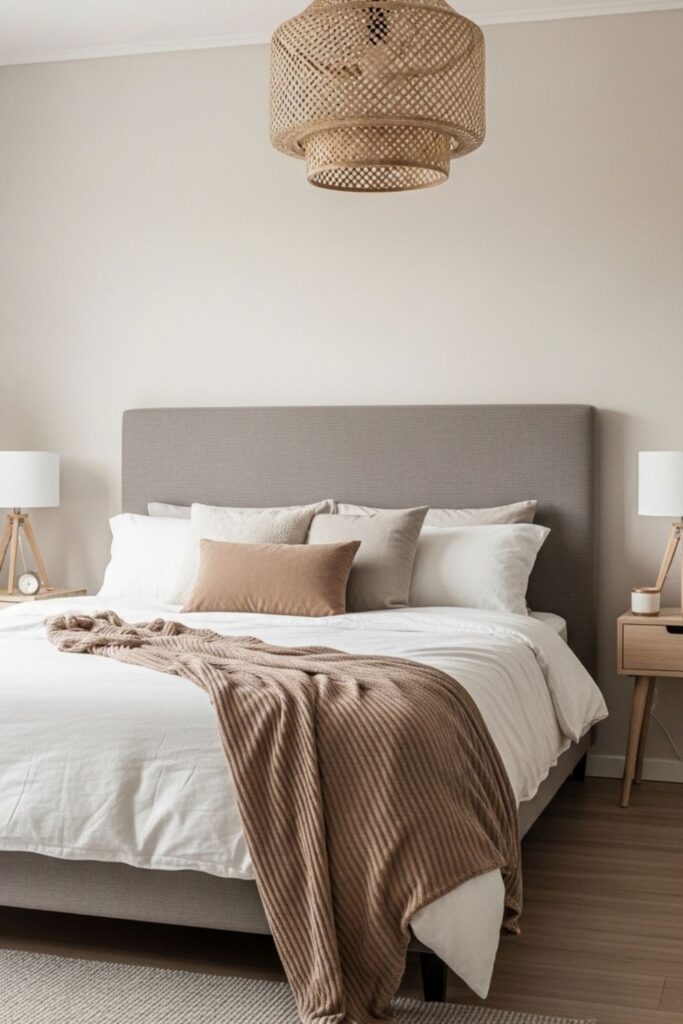
Japandi bedrooms often feature low beds and minimal furniture. This creates a grounded feeling and makes the room appear more spacious.
Low-profile furniture also supports a slower, more relaxed lifestyle. The bedroom feels closer to the floor, which subtly encourages stillness and calm.
In small Japandi bedroom design ideas, this approach is especially effective because it reduces visual weight and keeps the room open.
3. Natural Materials That Add Warmth
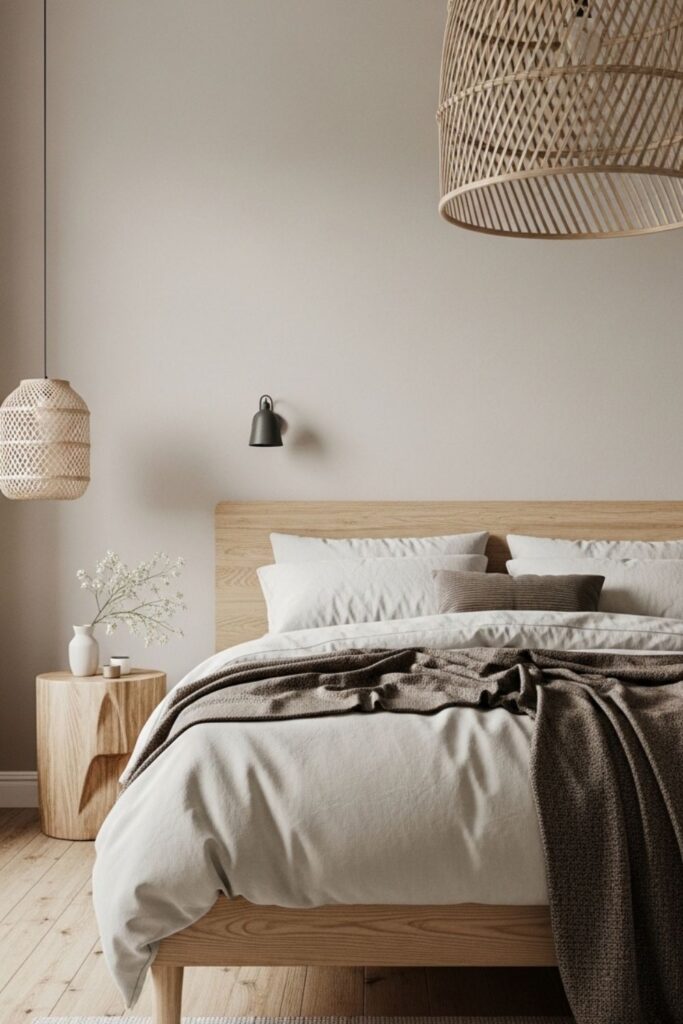
Wood, linen, cotton, and stone are essential in Japandi bedroom decor. These materials bring warmth and authenticity without overwhelming the space.
Light wood tones are commonly used to balance neutral walls. They add texture and prevent the room from feeling flat.
Natural materials also age beautifully, which makes the bedroom feel timeless rather than trend-driven.
4. Minimal Décor with Purpose
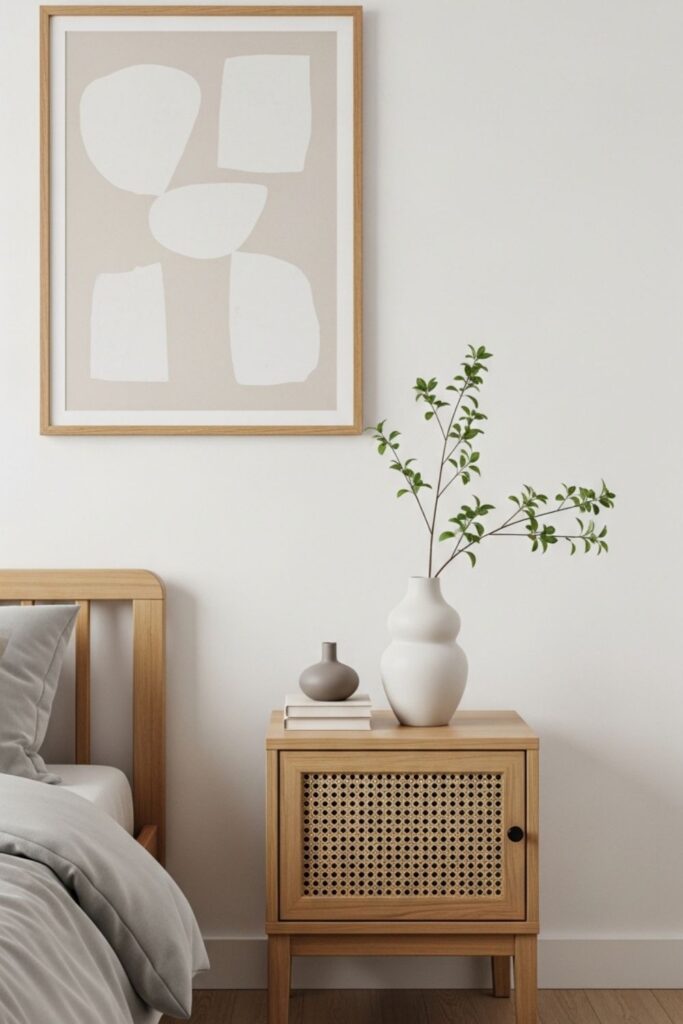
Japandi design avoids excess decoration. Instead of filling the room, it focuses on a few meaningful pieces.
A single piece of artwork, a ceramic vase, or a simple plant can add personality without disrupting calm. This aligns with minimalist Japandi bedroom principles.
In modern Japandi bedroom design, less décor allows the space to feel intentional and peaceful.
5. Soft Lighting That Enhances Calm
Lighting in Japandi bedrooms is always soft and warm. Harsh overhead lighting is replaced with lamps, paper lanterns, or diffused fixtures.
This type of lighting creates a gentle glow that supports relaxation. It also highlights textures and natural materials beautifully.
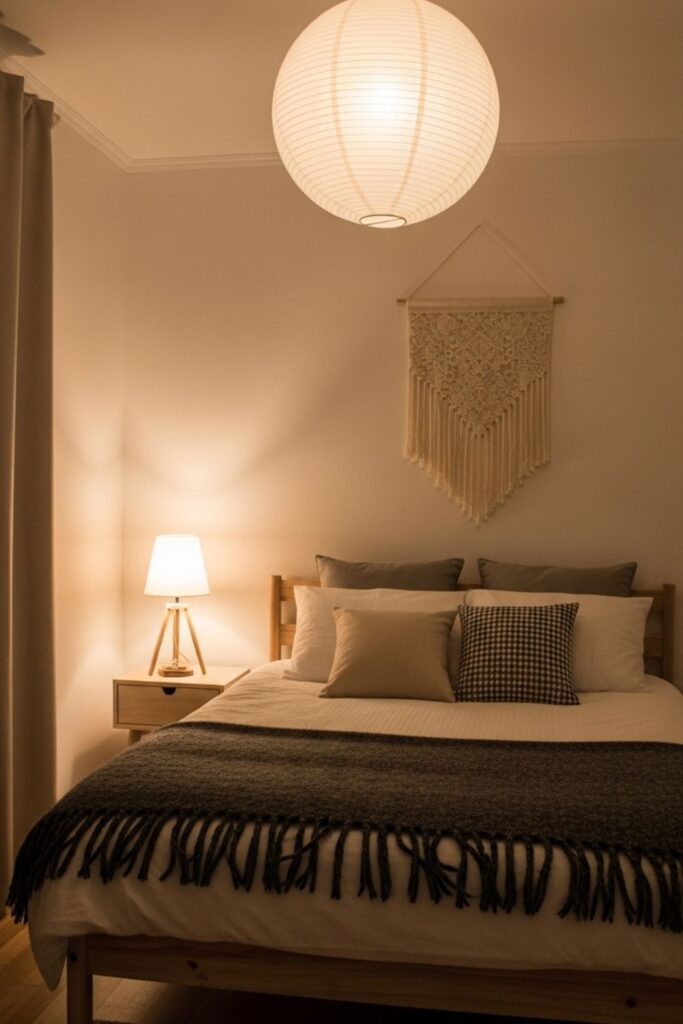
Japandi bedroom ideas Pinterest often show lighting as part of the atmosphere rather than just a functional element.
6. Japandi Bedroom for Small Rooms with Open Space Focus
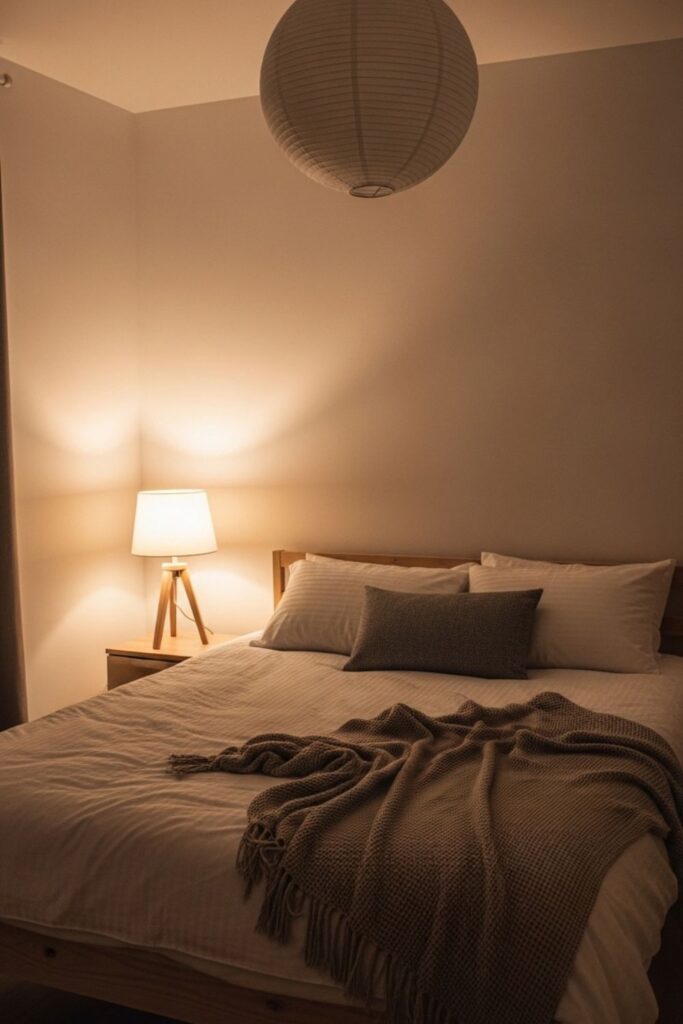
Japandi works especially well in small bedrooms because it prioritises openness. By reducing clutter and simplifying layouts, the room feels larger.
Furniture is carefully spaced, and unnecessary items are removed. This creates a sense of breathing room even in compact spaces.
Japandi bedroom design ideas for small rooms focus on quality over quantity, which improves both function and comfort.
7. Textures That Add Quiet Depth
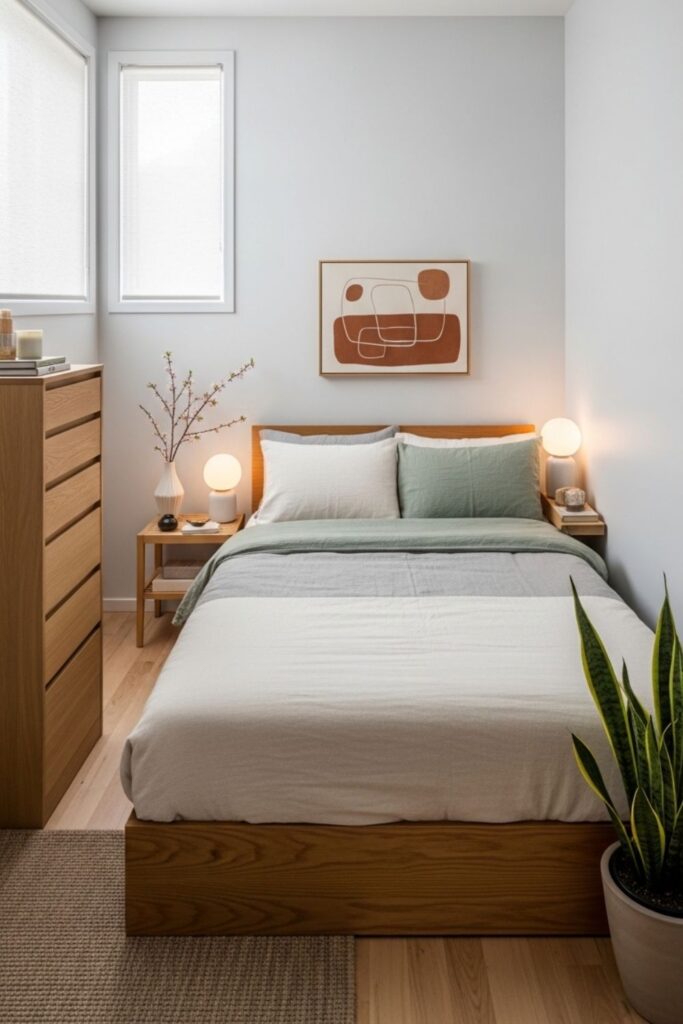
Instead of bold patterns, Japandi uses subtle textures. Linen bedding, woven rugs, and matte finishes create visual interest without distraction.
These textures make the room feel warm and layered while maintaining simplicity. They are key to achieving the Japandi bedroom aesthetic.
Texture replaces decoration, allowing the space to feel rich without being busy.
8. Indoor Plants for Natural Balance
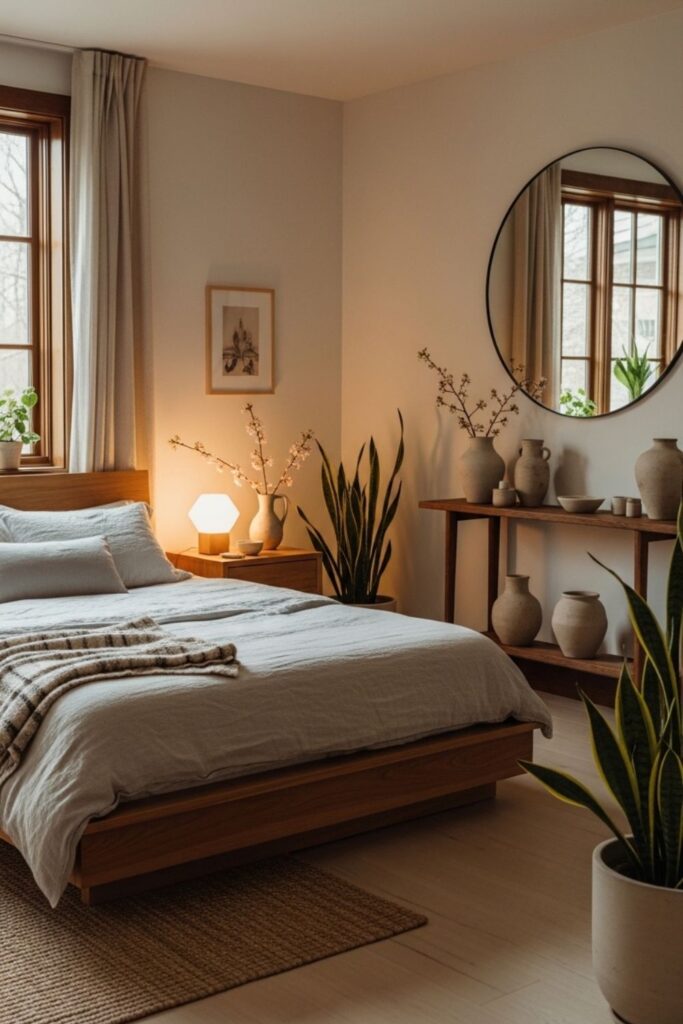
Plants bring life into Japandi bedrooms. A single well-placed plant can soften the space and connect it to nature.
In Japandi style bedroom ideas, plants are chosen carefully rather than used excessively. Simplicity remains the focus.
This natural element supports emotional calm and enhances the room’s peaceful atmosphere.
9. Decluttered Storage That Keeps the Room Calm
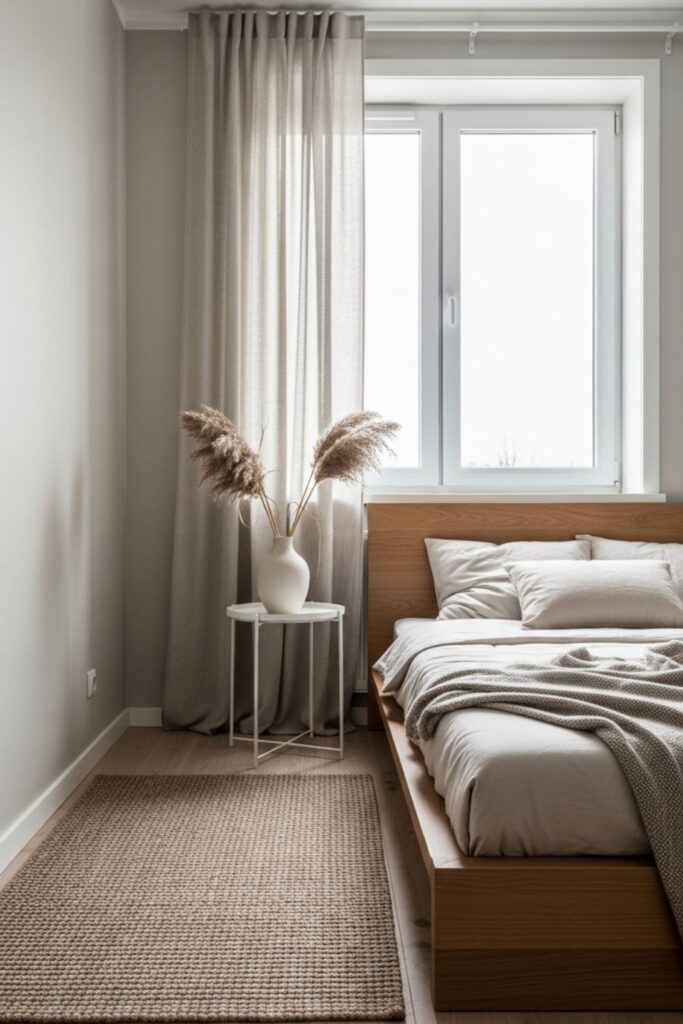
Storage in Japandi bedrooms is often hidden or minimal. Built-in wardrobes, under-bed storage, and simple shelving keep the space clean.
Clutter disrupts calm, so everything has a place. This approach makes the bedroom easier to maintain and more relaxing to use.
Japandi bedroom decor emphasizes function as much as beauty, ensuring the space works in daily life.
10. A Balanced Blend of Minimalism and Warmth
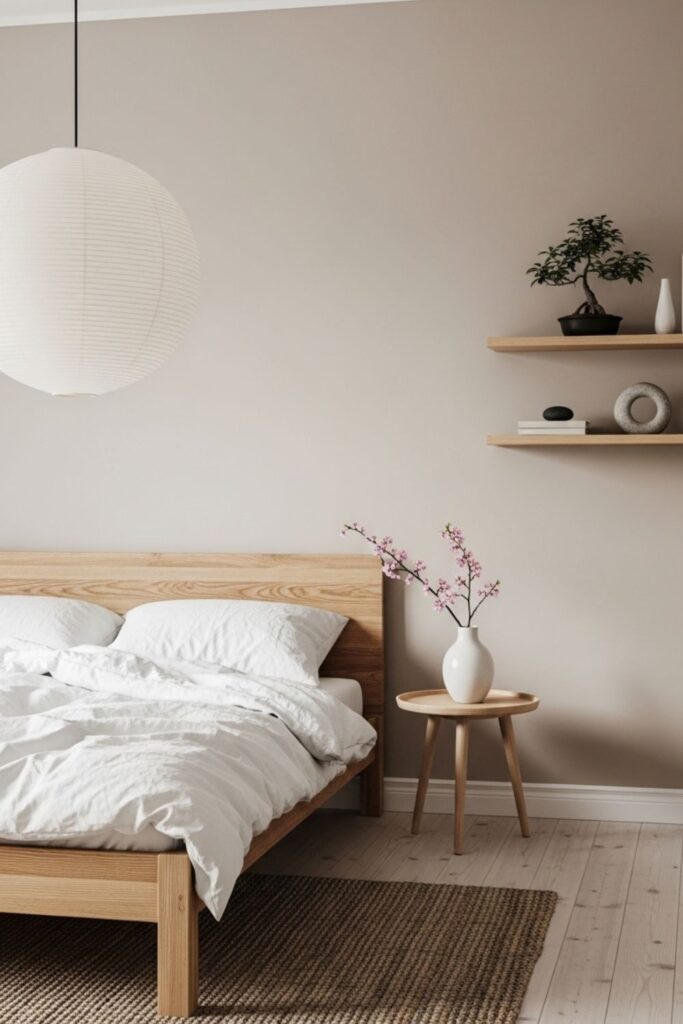
The essence of Japandi lies in balance. Scandinavian design brings warmth and comfort, while Japanese design brings simplicity and restraint.
Together, they create a bedroom that feels both cosy and minimal. This balance makes Japandi suitable for modern living.
A Japandi bedroom is not about perfection. It is about creating a space that feels calm, lived-in, and supportive of everyday life.
Conclusion: Japandi bedroom design ideas
Japandi bedroom design ideas offer a thoughtful approach to modern living. By combining natural materials, soft colours, minimal décor, and intentional layouts, bedrooms become calm and functional spaces. Whether for small rooms or larger homes, Japandi creates an environment that supports rest, clarity, and emotional balance. In a world that often feels busy, this style provides a quiet and lasting sense of comfort.
Read More: 10 Minimal Living Room Ideas That Feel Spacious and Elegant (Modern 2026 Guide)